


The Renault Twingo Is Finally Coming to the UK – Everything You Need to Know
There are some cars that are simply remembered.
And then there are cars that become part of an entire generation’s memory.
The Renault Twingo is one of them.
When the original Twingo appeared in 1992, it looked unlike almost anything else on the road. Small, colourful and deliberately unconventional, it took the idea of a city car and approached it from a completely different direction.
There was just one problem for British buyers.
We couldn’t officially buy one.
More than 30 years later, that is finally about to change.
Renault is bringing the new Twingo E-Tech electric to the UK, giving British buyers the chance to experience a nameplate that has been part of European motoring culture since the early 1990s.
And while the new Twingo is now fully electric, the philosophy behind it is surprisingly close to the original.
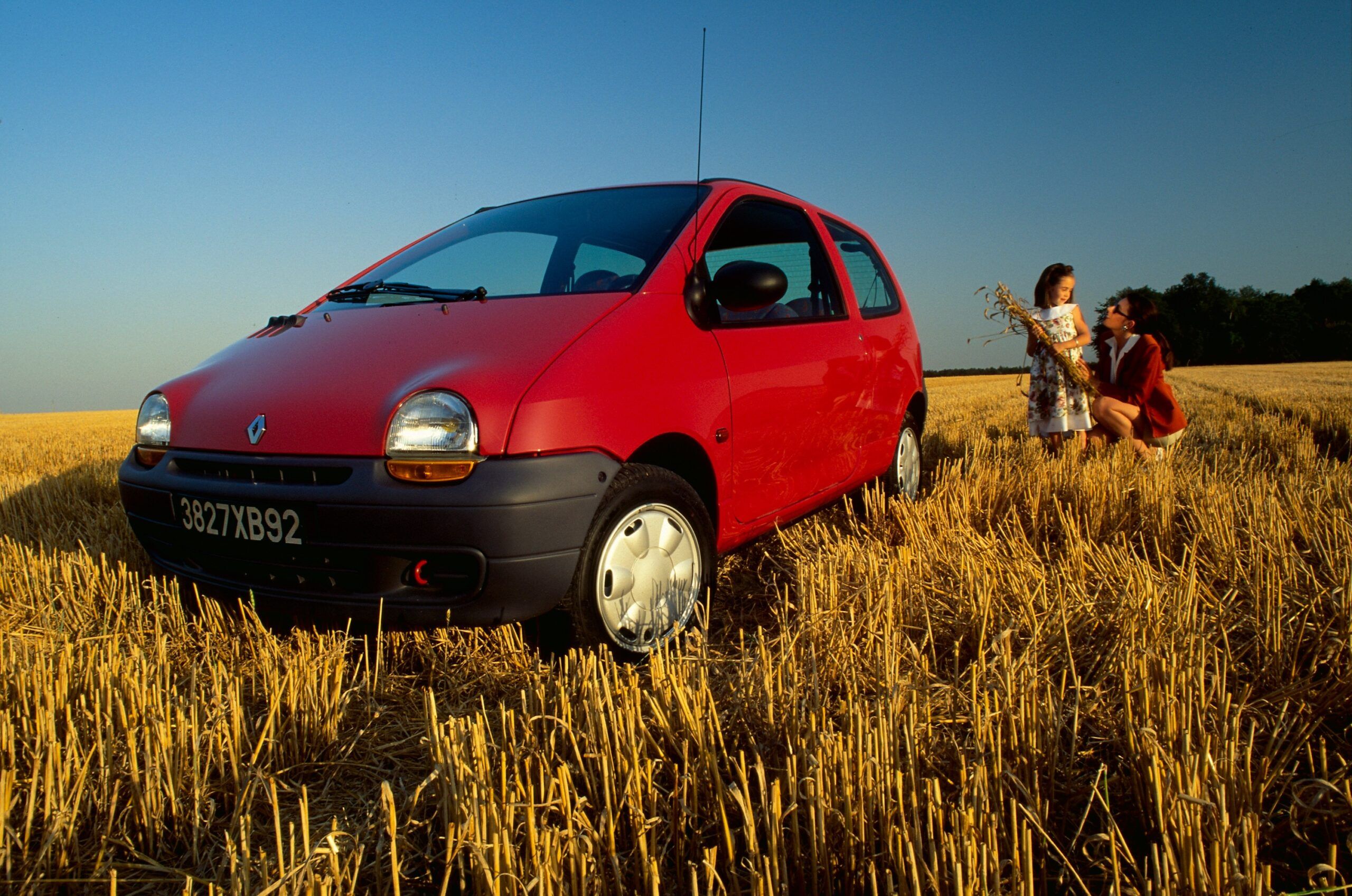
The Original Twingo: The Car Britain Never Got
The first-generation Twingo made its debut at the Paris Motor Show in September 1992 before going on sale across Continental Europe in April 1993.
It was a remarkably simple idea.
One version. One engine. One price. Four colours.
That was almost the complete opposite of the modern car industry’s obsession with multiple trim levels, option packs and endless configurations.
And it worked.
The Twingo was designed around making the maximum possible use of a very small footprint. Its tall, one-box shape, wheels pushed towards the corners and clever interior layout created considerably more space inside than its exterior dimensions suggested.
The rear bench could slide forwards and backwards, allowing owners to prioritise either passenger space or luggage capacity. The seats could also be configured in different ways, helping the little Renault feel far more versatile than its size suggested.
The name itself was a combination of three dance styles: Twist, Swing and Tango.
It was playful by design.
The first-generation Twingo went on to sell approximately 2.44 million examples, becoming one of Renault’s most recognisable small cars.
But British buyers could only watch from the sidelines.
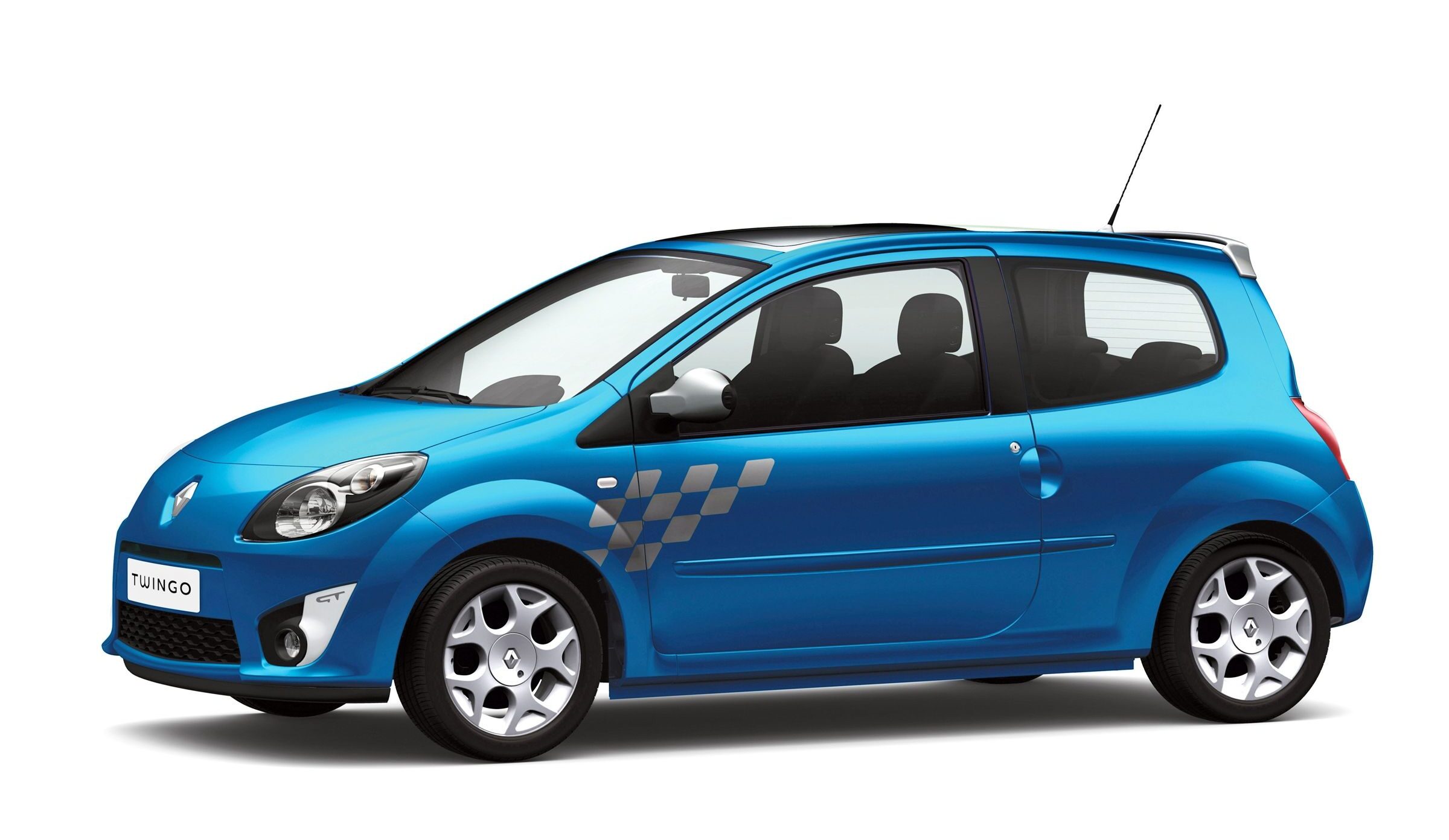
Twingo II: Britain Finally Gets a Twingo
The second-generation Twingo arrived in 2007 and marked an important change for the UK.
This time, Renault built it in right-hand drive.
For the first time, British buyers could walk into a Renault dealer and order a Twingo without having to resort to importing a left-hand-drive example from Continental Europe.
But Twingo II was a different kind of car.
The original had been deliberately unconventional. The second generation was more conventional in appearance and engineering, while still retaining the compact dimensions and practical interior that had made the name famous.
The range included a simple 1.2-litre petrol engine producing around 60hp, while the performance story eventually became considerably more interesting.
Renault later introduced the Twingo Renaultsport 133, using a naturally aspirated 1.6-litre engine producing 133hp and 160Nm of torque.
That turned the little Twingo into a genuinely entertaining hot hatch.
Twingo III: Rear-Engined and Rear-Wheel Drive
Then Renault did something rather unexpected again.
For the third-generation Twingo, launched in 2014, Renault moved the engine to the rear.
And the driven wheels were at the rear too.
The Twingo became a rear-engined, rear-wheel-drive city car.
It was developed alongside the Smart ForFour and used a compact three-cylinder petrol engine mounted behind the rear axle.
Power outputs included 70hp and 90hp, while the later Twingo GT pushed the concept further with around 110hp and 170Nm.
It was still tiny, but it had genuine character.
The rear-wheel-drive layout also helped produce an impressively tight turning circle, making the Twingo particularly well suited to the environment it had been designed for.
It was another example of Renault refusing to treat a small car as simply a scaled-down version of a larger one.
More Than 30 Years Later, the Twingo Is Back
Now we reach the fourth-generation Twingo.
And once again, Renault has gone back to the original formula.
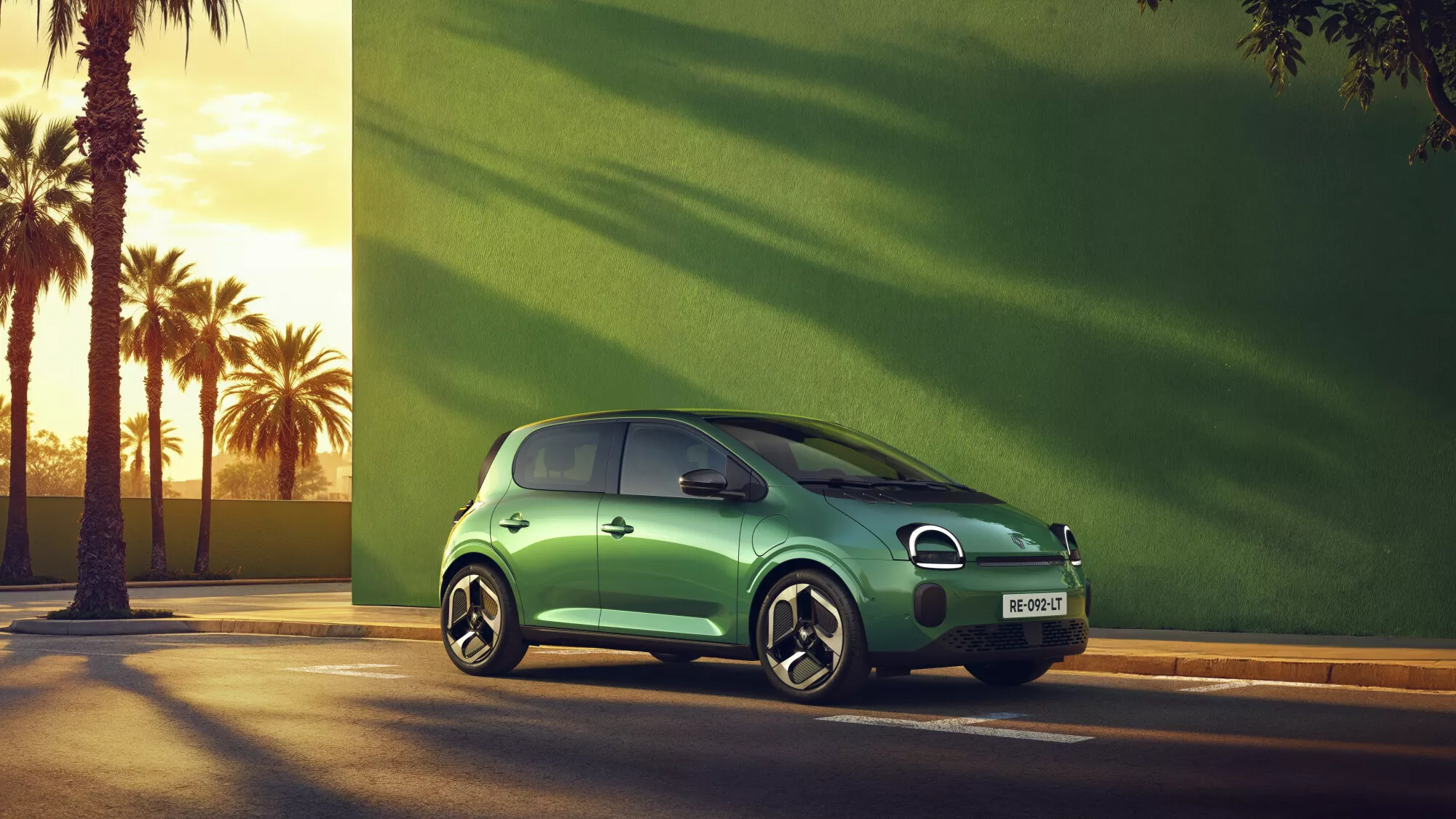
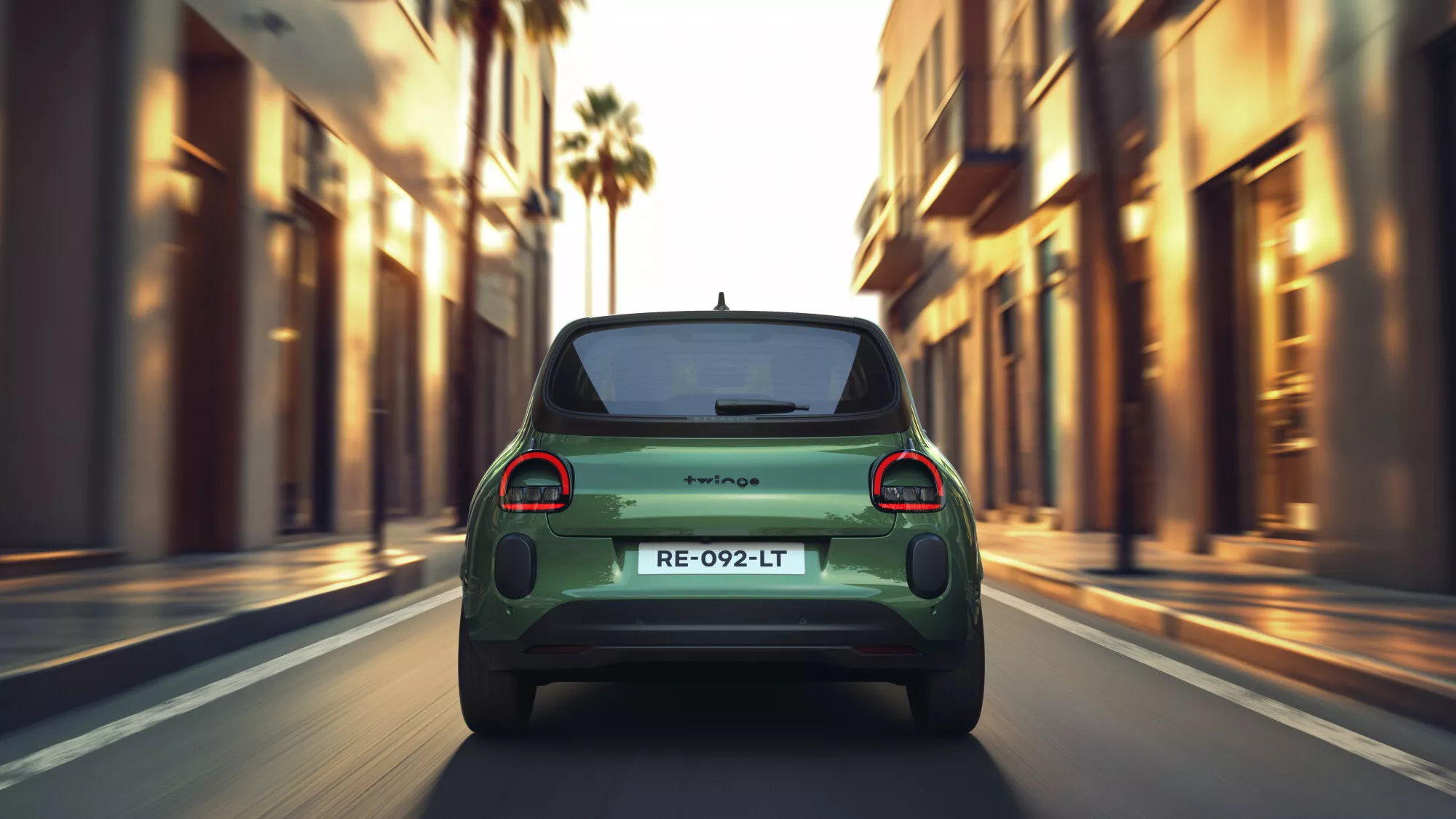
The new Twingo E-Tech electric is small, practical, colourful and deliberately different.
It measures just 3.79 metres long, has five doors and is designed specifically around urban driving.
There is also a clear visual connection with the original car.
The rounded headlights, upright body, compact proportions and friendly face all echo the character of the 1990s Twingo without simply copying it.
Underneath, however, this is very much a 2026 car.
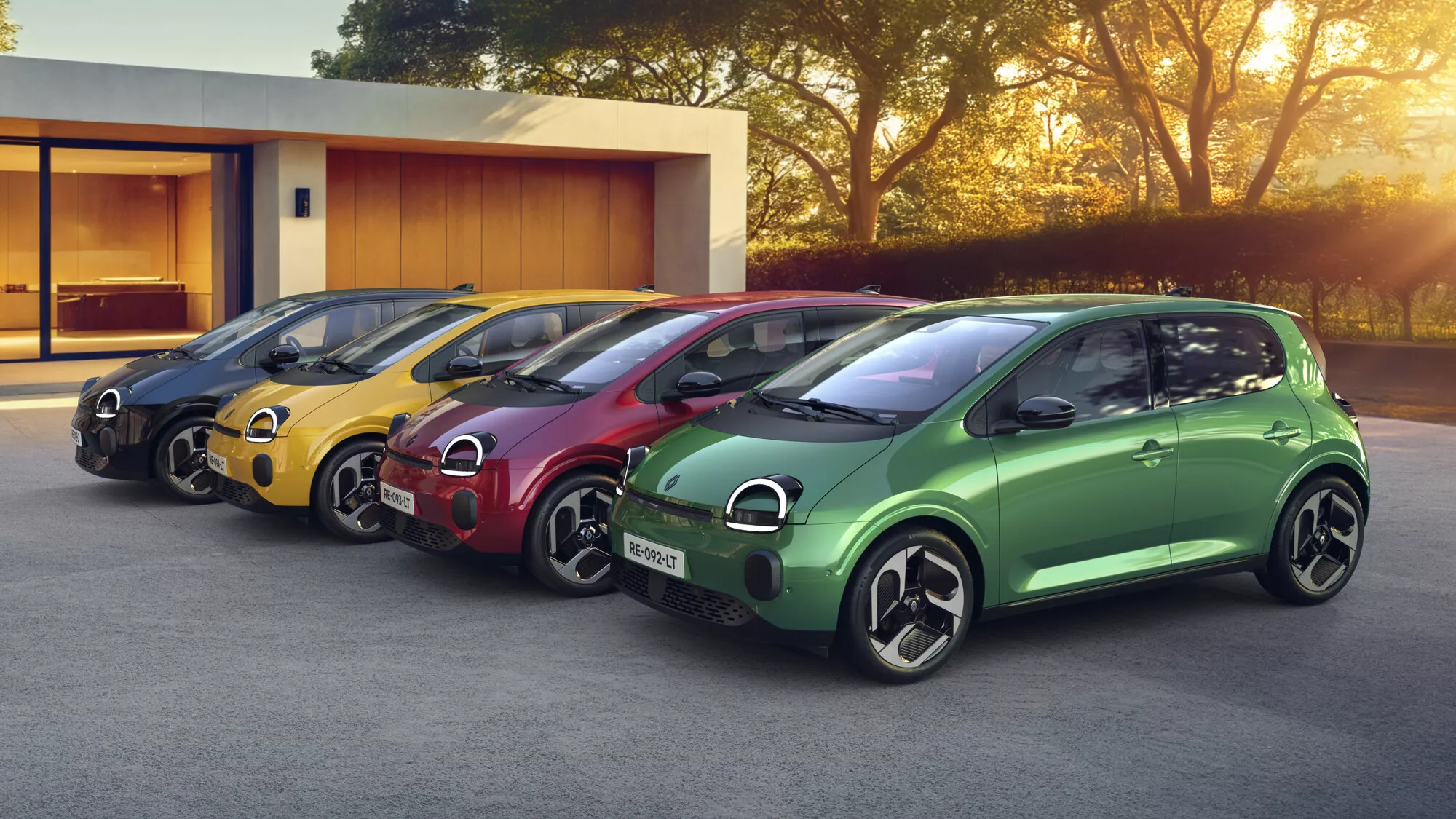
Four Colours – and a Lot of Personality
Renault has also resisted the increasingly monochrome world of modern cars.
The new Twingo is available in a range of distinctive colours, with four launch colours shown together that immediately bring back some of the personality associated with the original.
It is an important part of the car’s appeal.
The original Twingo wasn’t trying to look expensive or aggressive. It was cheerful, approachable and instantly recognisable.
The new car follows much the same philosophy.
Small Outside, Surprisingly Big Inside
This is where the Twingo philosophy really comes through.
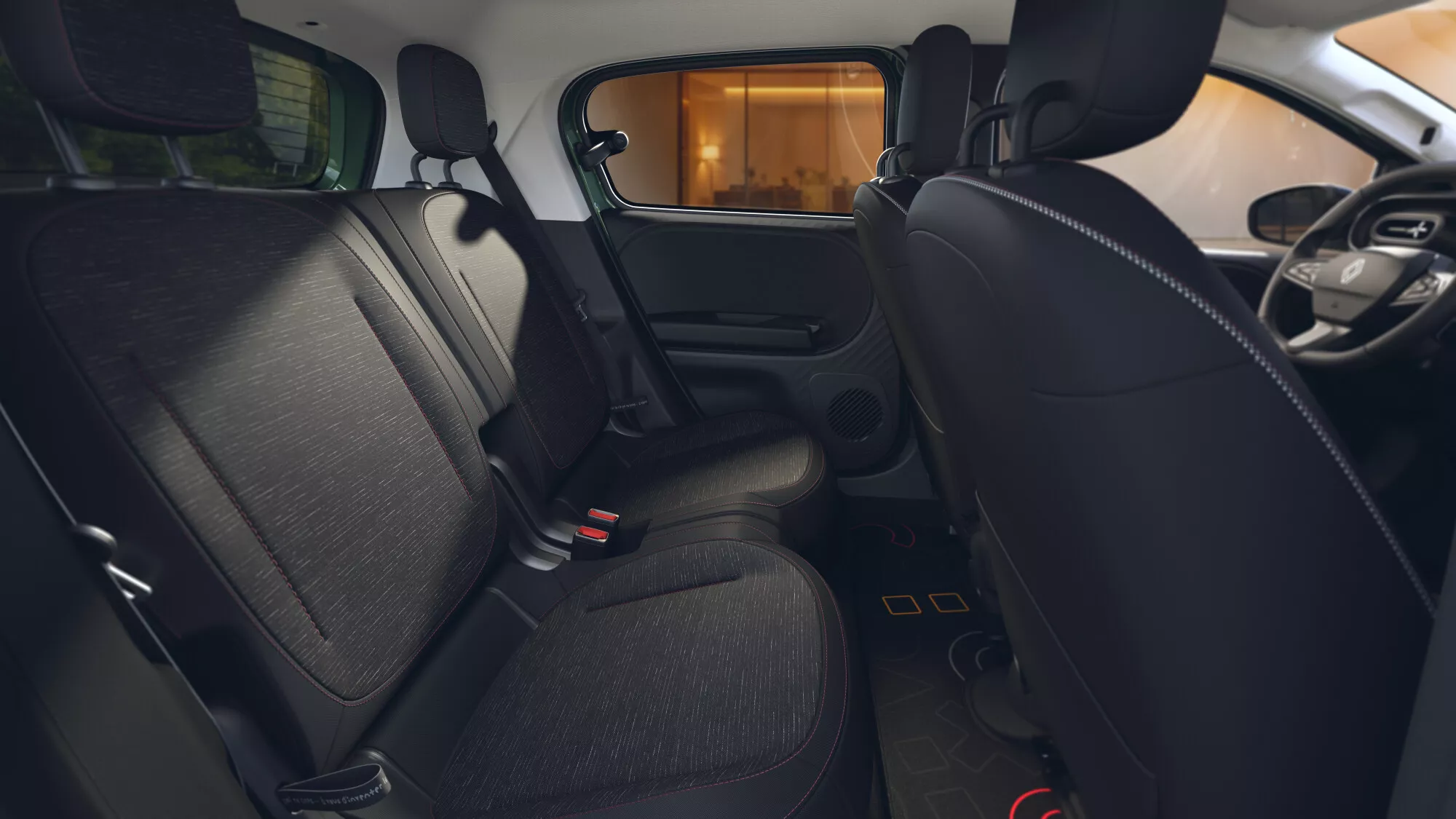
Despite being less than four metres long, the new Twingo has been designed to make clever use of the available space.
The rear seats can slide by up to 16cm, allowing owners to choose between increased passenger room and additional luggage space.
Renault quotes up to 360 litres of boot capacity, which is impressive for such a compact car.
And, just as with the original Twingo, the emphasis is less on absolute size and more on how effectively the space is used.
82hp and a Small Battery – Deliberately
On paper, the numbers don’t look particularly impressive.
The new Twingo E-Tech electric uses a single electric motor producing around 82hp and a 27.5kWh LFP battery.
Renault quotes a WLTP range of up to approximately 163 miles.
But this is not supposed to be a performance EV.
The Twingo is designed around being light, efficient and inexpensive to run.
Renault has targeted a relatively low energy consumption figure of around 12.2kWh/100km, helping the small battery deliver a useful real-world range without adding unnecessary weight and cost.
That approach makes a lot of sense for a city car.
Why carry a huge battery around every day when most urban journeys are only a fraction of the available range?
Efficiency Is One of the Twingo’s Biggest Strengths
The Twingo’s small dimensions and modest power output are actually advantages when it comes to efficiency.
It weighs around 1,200kg, depending on specification, making it considerably lighter than many modern electric vehicles.
There is also less aerodynamic and rolling resistance to overcome than with a large SUV.
The result is an EV designed around the reality of everyday urban driving rather than headline-grabbing acceleration figures.
And that is perhaps one of the most interesting things about the new Twingo.
At a time when electric cars have generally become larger, heavier and more powerful, Renault has gone in the opposite direction.
Charging: Small Battery, Quick Top-Ups
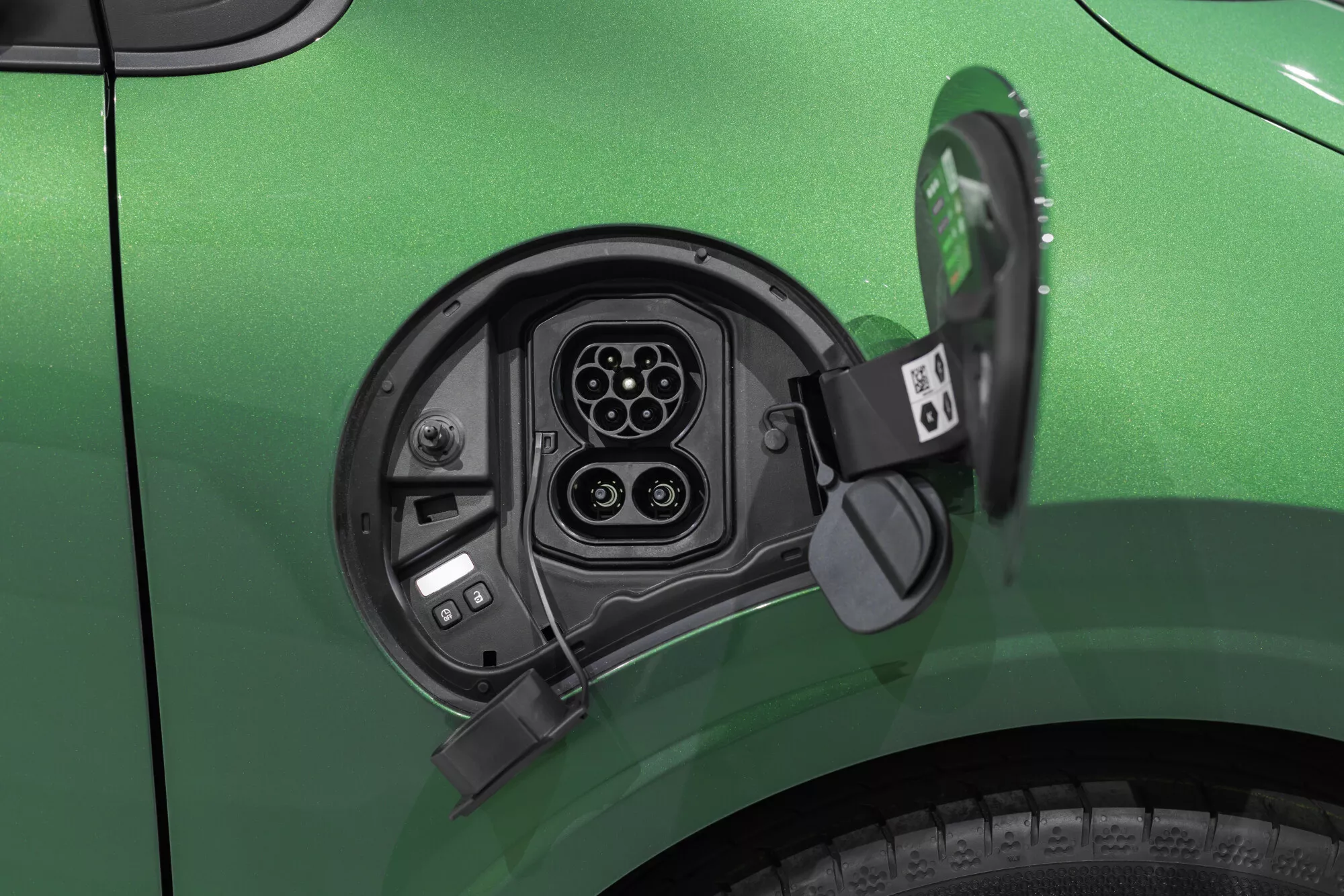
The standard car has a 6.6kW AC onboard charger, while higher specifications can be equipped with an 11kW bidirectional AC charger.
DC fast charging of up to 50kW is also available.
Renault quotes approximately 30 minutes to charge from 10% to 80% when using a suitable DC charger.
The bidirectional charging technology also opens the door to some interesting possibilities.
The car can provide up to 3.7kW through V2L, allowing it to supply electricity to external equipment, while V2G technology can potentially allow the vehicle to interact with the electricity grid.
The Interior Is a Long Way From 1993
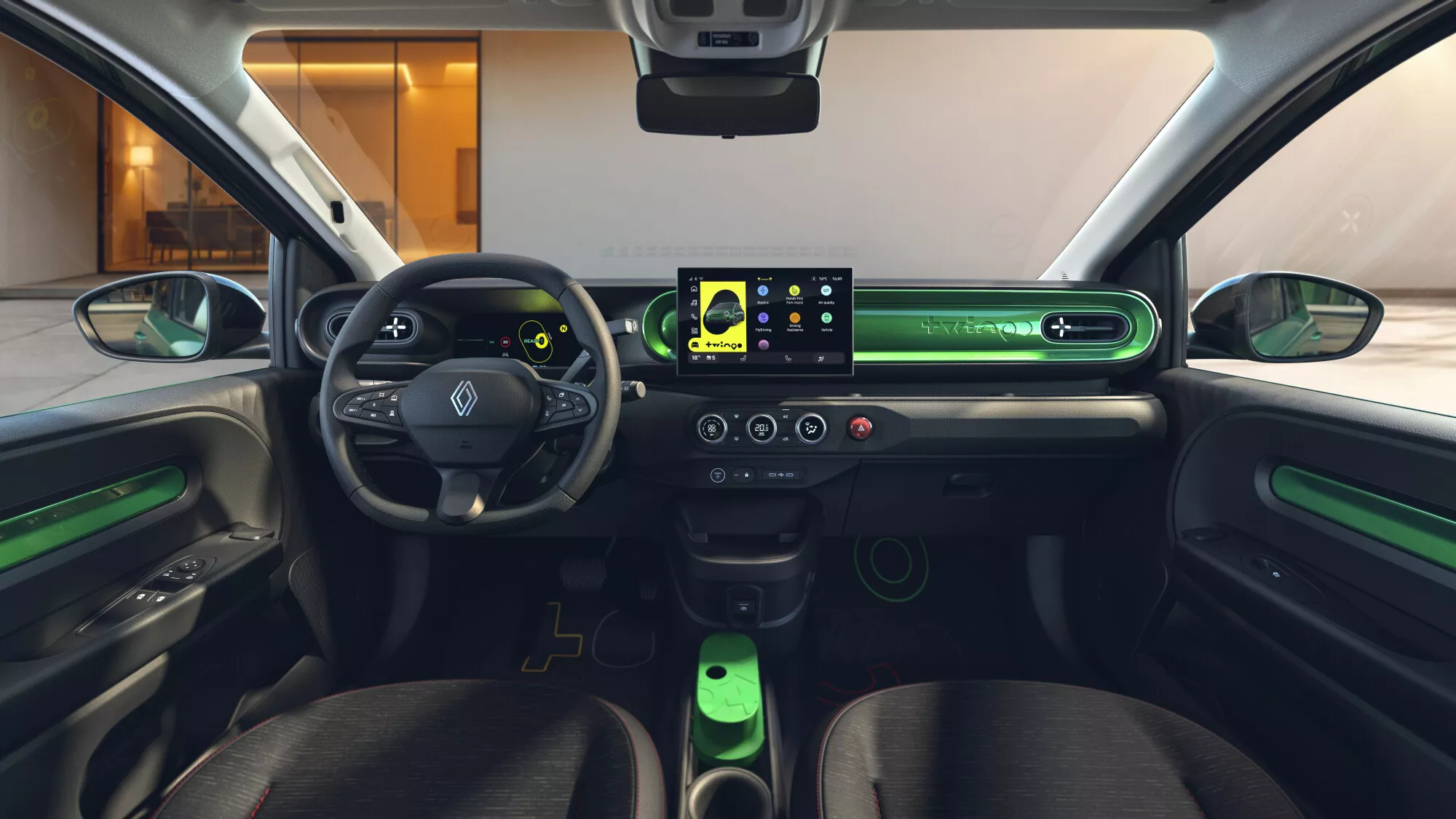
Inside, the difference between the original Twingo and the new car is obvious.
The basic philosophy may be similar, but the technology certainly isn’t.
The new Twingo gets a modern digital interior with connected technology and driver assistance systems, while Renault says up to 24 ADAS functions are available depending on specification.
That means features that simply didn’t exist when the original Twingo was launched are now incorporated into a car that remains smaller than many modern superminis.
Yet Renault has still tried to keep the cabin light-hearted rather than turning it into another anonymous technology showcase.
The Twingo Is Still About Cleverness
This is probably the most important thing to understand about the new Twingo.
It isn’t trying to beat a larger electric car on battery size, power or motorway range.
Instead, it is trying to do something much simpler.
Make a small car that works exceptionally well in the environment it was designed for.
That was exactly what made the original Twingo interesting.
It wasn’t simply small because it was cheap. Its size was part of the concept.
The same thinking can be seen in the new car’s compact footprint, sliding rear seats, small battery, low energy consumption and tight urban dimensions.
In a market where cars have become progressively larger, Renault is effectively asking whether a small car can once again be enough.
And This Time, Britain Gets One
For British Twingo fans, this is perhaps the biggest story of all.
The original Twingo was never officially sold in the UK, despite becoming hugely popular elsewhere in Europe.
Some did eventually find their way onto British roads as left-hand-drive imports, but the car remained something of a curiosity here.
Twingo II changed that in 2007 when Renault finally introduced a right-hand-drive version for the UK.
Now, almost 20 years after that first official UK Twingo arrived, the name is returning once again.
And this time it is electric.
The Twingo at 20 Years Old
There is a nice historical coincidence here.
When the Twingo celebrated its 20th anniversary in 2013, Renault was already looking back at the little car’s remarkable history and the way it had managed to remain distinctive for two decades.
At that point, nobody could have known that another generation would eventually bring the Twingo into the electric era.
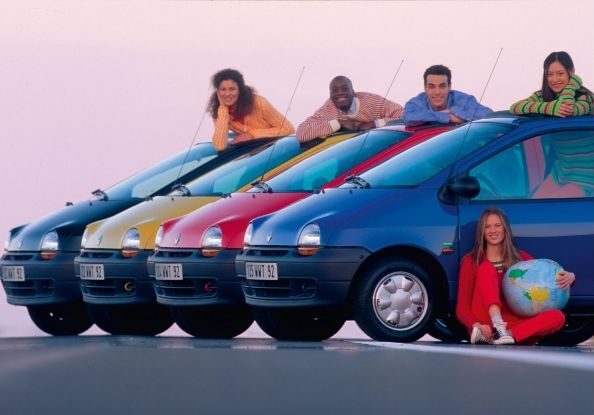
Looking at the original car now, the connection with the 2026 model becomes even more obvious.
The technology has changed completely.
The proportions, practicality and sense of personality have not.
A Twingo for 2026
The new Twingo E-Tech electric is therefore more than just another small EV.
It is Renault deliberately bringing one of its most recognisable names back to its roots.
Small dimensions.
Clever use of space.
Simple electric power.
Low running costs.
And plenty of personality.
The European starting price is around €19,490, putting it firmly into the more affordable end of the electric-car market. UK pricing and final UK specifications will be confirmed separately.
That is potentially important because the affordable end of the EV market is exactly where there has been a noticeable gap.
While manufacturers have concentrated heavily on larger electric SUVs and premium models, the Twingo is returning to a category that has almost disappeared from the new-car market.
When Can You Buy the New Renault Twingo in the UK?
Renault has confirmed that the new Twingo E-Tech electric is scheduled to launch in the UK during 2026.
Renault UK has already opened its R Pass programme, allowing interested buyers to register their interest ahead of general ordering.
Left-hand-drive display cars have also begun appearing at UK Renault retailers ahead of the full UK launch.
The R Pass currently costs £100, with the full UK ordering process and final specifications to follow.
So, for the first time in its history, British buyers are going to be able to experience the Twingo from the very beginning rather than watching the story unfold across the Channel.
The Renault Twingo Has Come Full Circle
More than three decades after the original Twingo first appeared in Paris, the name has come full circle.
The first car was revolutionary because it questioned what a small car had to be.
The latest car is doing something remarkably similar with electric power.
It doesn’t have the biggest battery.
It doesn’t have hundreds of horsepower.
It doesn’t need to.
The Twingo has always been about doing more with less.
And perhaps that is exactly why the return of the name is so interesting.
The little Renault that Britain never officially got is finally coming back – and this time, we’re getting it from day one.
And Yes, DTUK Already Supports the Twingo
There is also a small DTUK connection to the Twingo story.
We’ve already been offering DTUK PedalBox and PedalBox Pro for the current-generation Twingo, giving owners the ability to sharpen the accelerator response without modifying the engine ECU.
For example, our Renault Twingo III 0.9 TCe 95 application is available with DTUK PedalBox, providing adjustable throttle response through a simple plug-and-play installation.
View the DTUK PedalBox for Renault Twingo III
And when the new electric Twingo E-Tech arrives in the UK, we intend to offer our PedalBox EV for the new car as well, subject to final vehicle compatibility and application development.
That makes the Twingo a particularly interesting little car from our point of view. The original was all about making a small car feel bigger and more versatile than it really was. The new electric version takes the same basic idea and brings it into a completely different era.