


The Audi RS 3 Competition Limited and 50 Years of the Legendary Five-Cylinder
There are faster engines. There are more powerful engines. There are certainly more efficient engines.
But few engines in modern performance motoring have a history, character and emotional connection quite like Audi’s five-cylinder.
For nearly half a century, the distinctive five-cylinder has been part of Audi’s identity. From the road cars of the 1970s to the terrifying rally cars of Group B, from the original quattro to the RS2 and today’s RS 3, the five-cylinder has produced some of the most memorable performance cars ever to wear the four rings.
Now, as Audi celebrates 50 years of the five-cylinder engine, the story reaches another important milestone with the arrival of the Audi RS 3 Competition Limited.
It is a fitting moment to look back at one of the most distinctive engines in automotive history – and at how the modern 2.5 TFSI evolved from a 340PS TT RS into today’s 400PS RS 3.
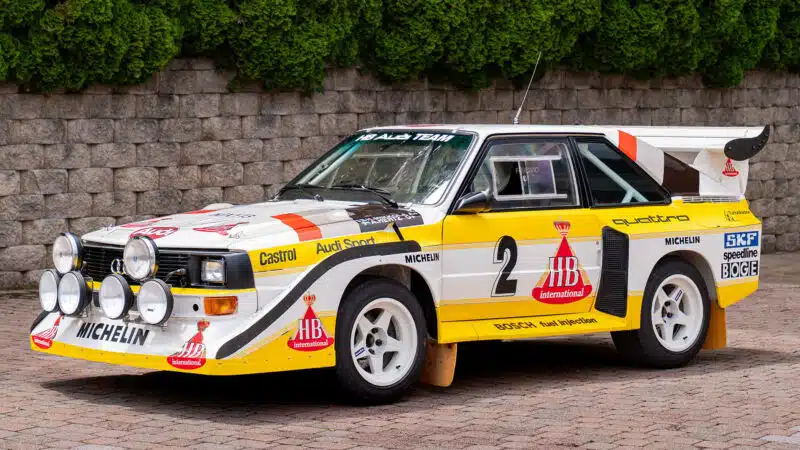
50 Years of the Audi Five-Cylinder
The Audi five-cylinder story began in 1976.
The first production application appeared in the Audi 100, where the unusual engine configuration offered Audi something different from the conventional four-cylinder and six-cylinder engines used by many competitors.
The original five-cylinder produced around 136PS.
It was only the beginning.
Turbocharging soon transformed the concept, allowing Audi to develop the five-cylinder into a genuine high-performance engine.
And then came the car that changed everything.
The Original quattro Changed Motorsport Forever
When Audi launched the original quattro in 1980, the combination of a turbocharged five-cylinder engine and permanent four-wheel drive created something revolutionary.
The road-going quattro produced 200PS, but its importance went far beyond the power figure.
Audi had created a completely new approach to high-performance rallying.
Within a few years, the five-cylinder engine would become synonymous with some of the wildest and most spectacular cars in motorsport history.
The quattro revolution had begun.
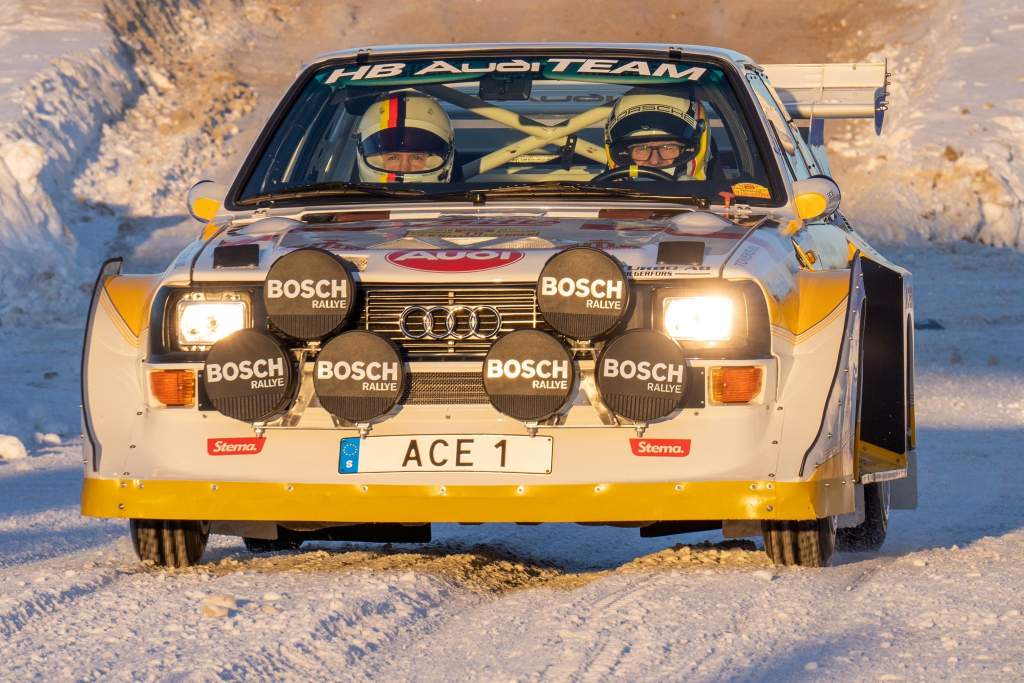
Group B: When the Five-Cylinder Became a Legend
For many enthusiasts, the ultimate expression of the Audi five-cylinder came during the Group B era.
The Sport quattro S1 became one of the most iconic rally cars ever created.
Depending on specification, competition engines were producing extraordinary levels of power, with some versions approaching or exceeding 500PS and later developments producing substantially more.
More than the numbers, however, it was the sound and character of the engine that became unforgettable.
The distinctive five-cylinder firing order created a noise unlike almost anything else in motorsport.
It was mechanical.
It was aggressive.
And it was unmistakably Audi.
Even today, decades after Group B disappeared, the sound of an Audi five-cylinder remains one of the most recognisable engine notes in the automotive world.
Why Does a Five-Cylinder Sound So Different?
The answer lies partly in the engine’s unusual firing sequence.
Audi’s modern five-cylinder uses the firing order:
1-2-4-5-3
The result is a distinctive rhythm that sits somewhere between the smoothness of a six-cylinder and the sharper character of a four-cylinder.
It is one of the reasons why the five-cylinder has always had such a strong emotional appeal.
You do not simply hear one.
You recognise it.
From Rally Stages to the Road
The five-cylinder did not disappear when the Group B era came to an end.
Audi continued developing the concept for its road cars.
The legendary Audi RS2, developed in partnership with Porsche, used a turbocharged five-cylinder producing 315PS.
At the time, it was one of the fastest estate cars in the world.
But the modern era of the five-cylinder was still to come.
The Original Modern 2.5 TFSI
The return of the five-cylinder to the heart of Audi Sport’s modern performance range came with the introduction of the 2.5 TFSI.
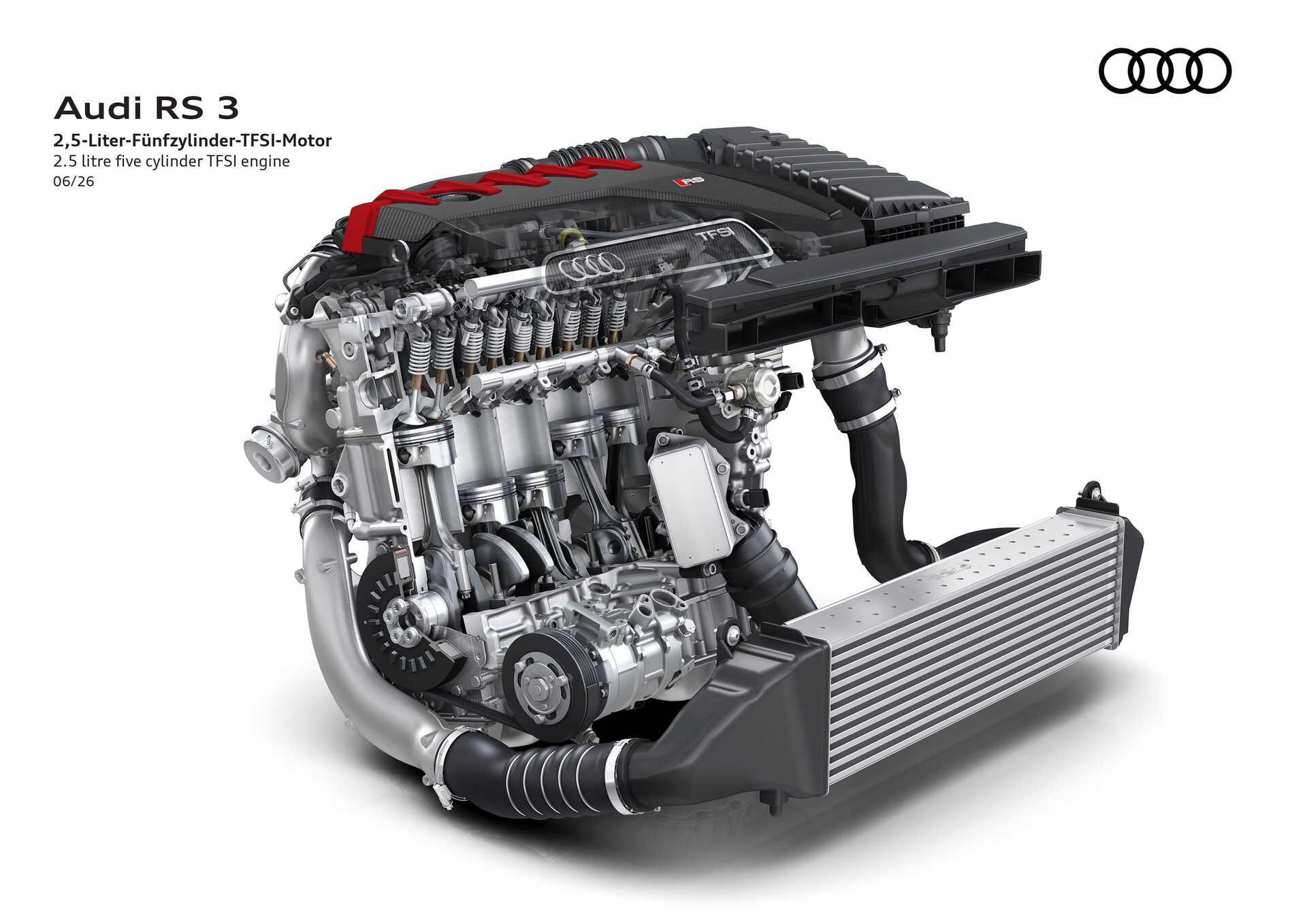
This compact, turbocharged five-cylinder engine would become one of the defining performance engines of the modern Audi era.
Its first major appearance came in the original Audi TT RS.
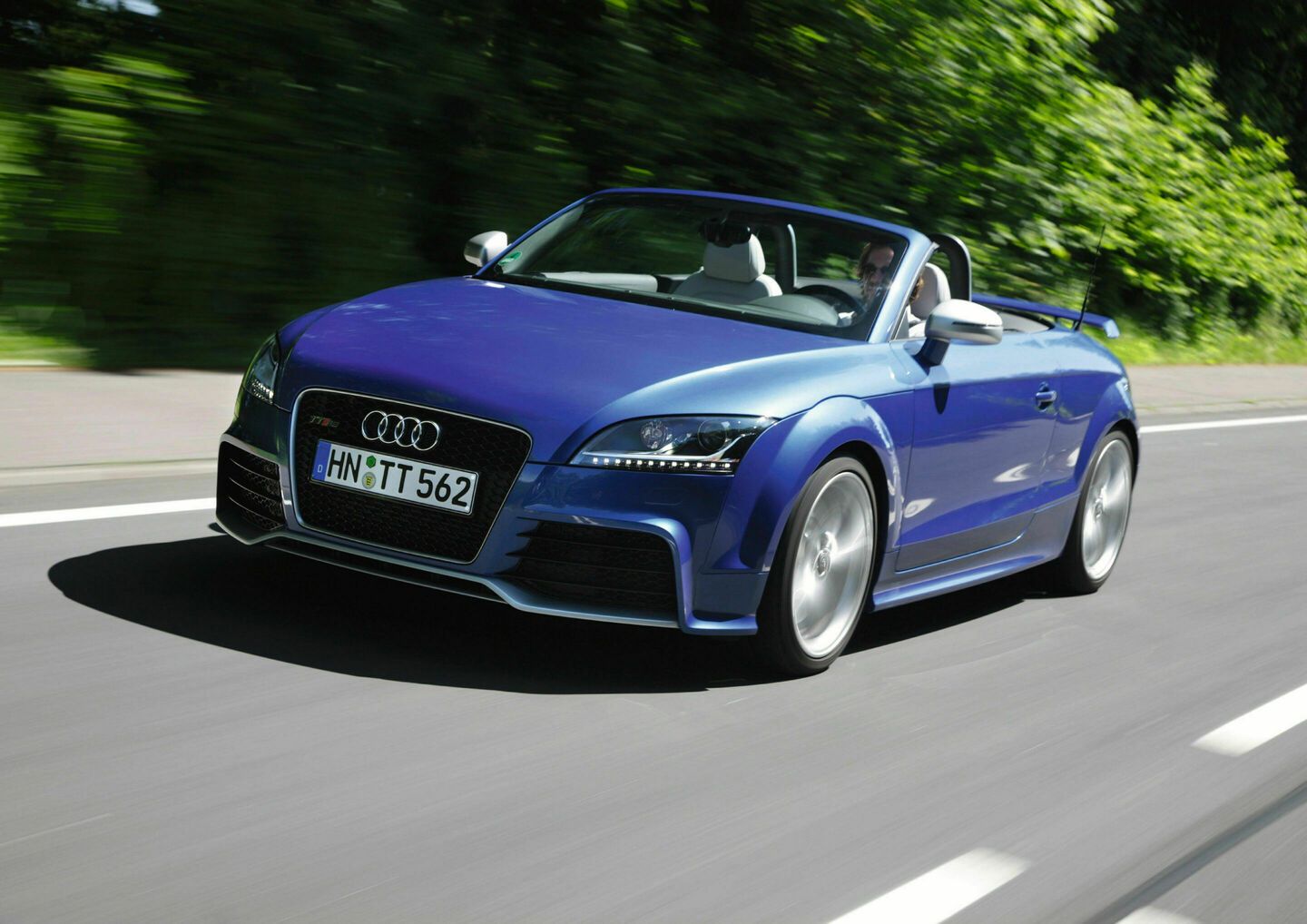
The Audi TT RS: 340PS and the Return of the Five-Cylinder
The original modern Audi TT RS arrived with something enthusiasts had been waiting years to see.
A five-cylinder performance engine was back.
The 2.5 TFSI produced:
- 340PS
- 450Nm
Those were serious figures at the time.
But more importantly, the TT RS delivered something that had been missing from many modern turbocharged performance cars: genuine character.
The five-cylinder sound returned.
And Audi enthusiasts immediately recognised what they were hearing.
DTUK Experience with the Original 340PS Generation
The original 340PS 2.5 TFSI also represents an important part of DTUK’s history with the modern Audi five-cylinder.
Historical DTUK/DTE application data recorded results of approximately:
- Standard: 340PS
- DTUK result: 390PS
Torque increased from:
- 450Nm
- To approximately 500Nm
That represented a substantial transformation in an engine that was already one of the most exciting performance units of its generation.
Please note: this is included as part of DTUK’s historical experience with the 2.5 TFSI. Product availability changes over time and this original 340PS application is not currently listed as a tuning box application on the DTUK website.
The First Audi RS 3: The Five-Cylinder Returns to the Hatchback
The next major chapter came with the original Audi RS 3.
The 8P-generation RS 3 brought the five-cylinder engine into the compact performance hatchback market.
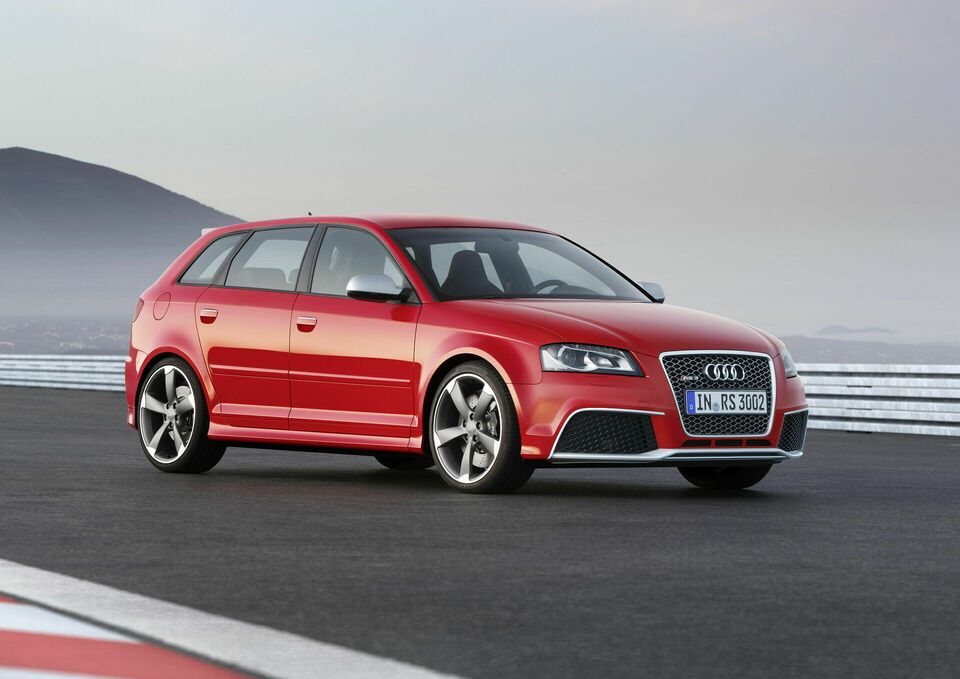
Its 2.5 TFSI produced 340PS, giving the RS 3 a performance advantage over many of its rivals.
At the time, the idea of a five-cylinder, all-wheel-drive compact hatchback producing 340PS was something genuinely special.
The RS 3 was not simply another hot hatch.
It was a compact Audi Sport car with an engine layout directly connected to the company’s greatest performance history.
The MQB Generation: 367PS
The next major evolution arrived with the 8V-generation RS 3.
Initially producing 367PS and 465Nm, the new RS 3 combined the five-cylinder engine with Audi’s newer MQB platform.
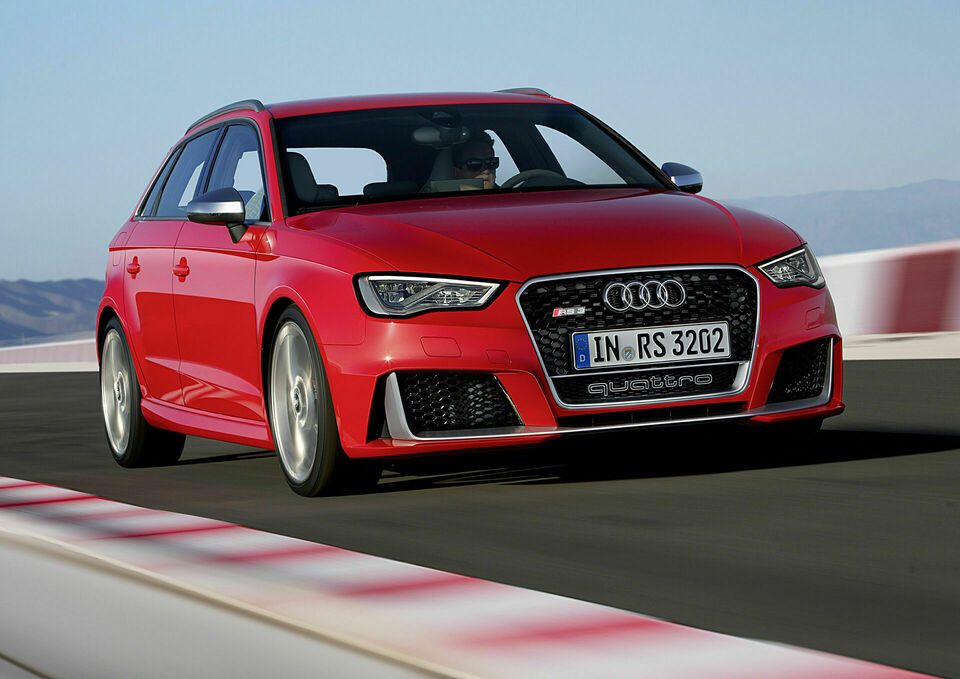
The result was a car that was quicker, more refined and more capable than its predecessor, while still retaining the unique character of the five-cylinder.
DTUK Performance Results: 367PS RS 3
For the 367PS RS 3, DTUK performance figures show:
- Standard: 367PS / 465Nm
- DTUK result: 410PS / 527Nm
That represents gains of:
- +43PS
- +62Nm
The figures demonstrate how the performance potential of the 2.5 TFSI continued to develop alongside Audi’s own evolution of the engine.
View current DTUK products and performance information for the Audi RS 3 Sportback 8V 367PS
400PS: The Five-Cylinder Reaches a New Level
Audi then raised the output of the five-cylinder RS 3 to 400PS.
The updated engine brought the RS 3 into an entirely different performance category.
The car was now capable of challenging significantly larger and more expensive performance machines.
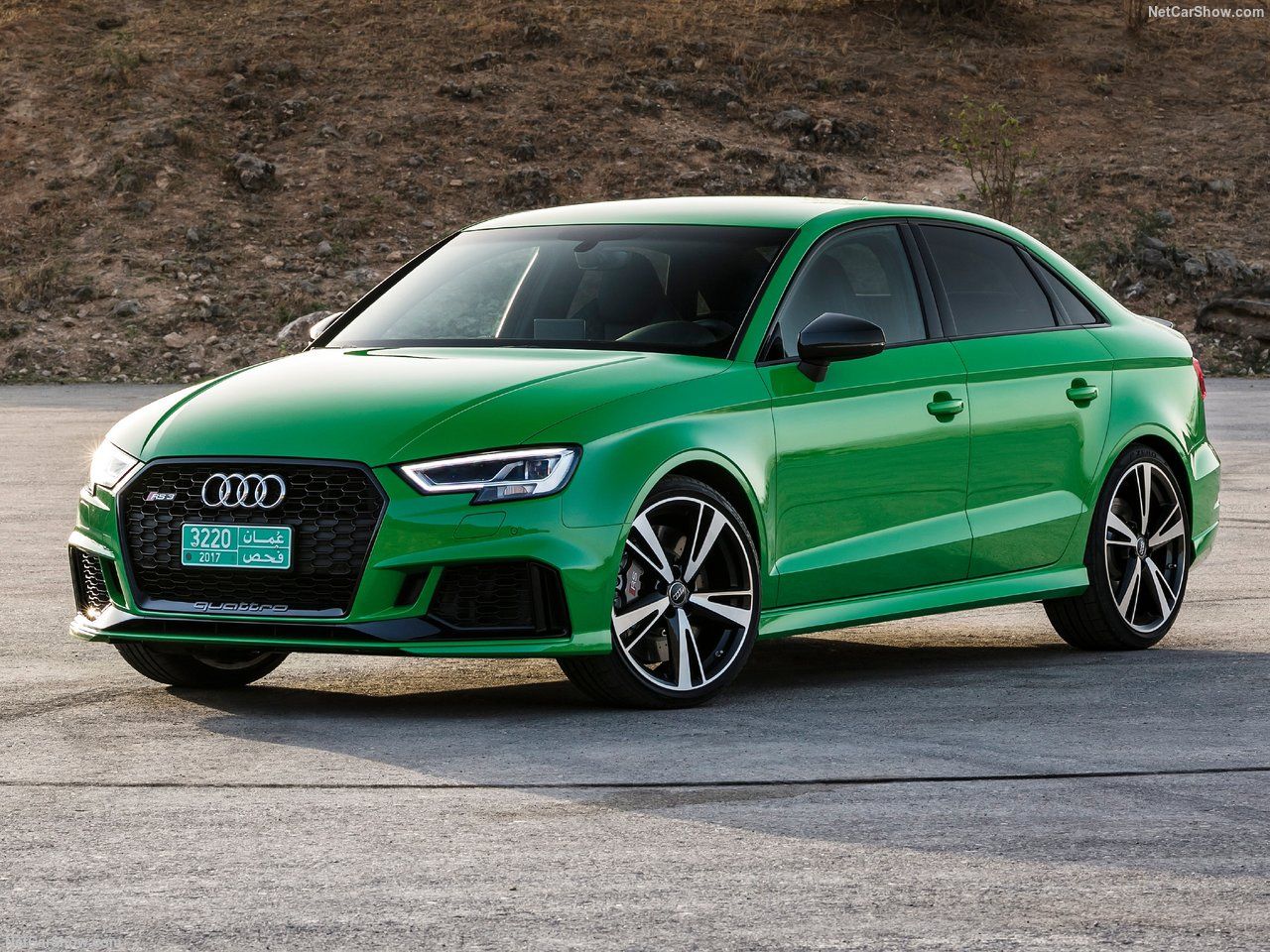
DTUK Performance Results: 400PS / 465Nm RS 3
For the 400PS RS 3 8V generation, DTUK published results of:
- Standard: 400PS / 465Nm
- DTUK result: 443PS / 527Nm
That represents gains of:
- +43PS
- +62Nm
View DTUK performance information for the Audi RS 3 8V 400PS
The Current RS 3: 400PS and 500Nm
The latest generation of the Audi RS 3 represents the most advanced version of the five-cylinder story.
The current 2.5 TFSI produces:
- 400PS
- 500Nm
Those figures are remarkable for a 2.5-litre engine.
But the RS 3 is about more than outright output.
Despite the increasing electrification of the performance car market, Audi has continued to offer an engine with a genuine mechanical identity.

DTUK Performance Results: Current 400PS RS 3
DTUK performance data for the latest 400PS / 500Nm 2.5 TFSI application shows:
- Standard: 400PS / 500Nm
- DTUK result: 460PS / 566Nm
That represents gains of:
- +60PS
- +66Nm
It is a significant increase in performance while retaining the characteristics that make the five-cylinder engine so special.
View DTUK products and performance information for the Audi RS 3 Sportback 8Y
The 2024 RS 3 Facelift
The story continues with the facelifted Audi RS 3.
The five-cylinder remains at the heart of the car, continuing to produce:
- 400PS
- 500Nm
The 2024-onwards RS 3 continues the remarkable tradition of Audi’s compact five-cylinder performance cars.
DTUK Performance Results: 2024-onwards RS 3 Sportback
For the facelifted RS 3 Sportback, DTUK performance figures are:
- Standard: 400PS / 500Nm
- DTUK result: 460PS / 566Nm
That means:
- +60PS
- +66Nm
View DTUK performance information for the 2024-onwards Audi RS 3 Sportback
Beyond the RS 3
The modern five-cylinder engine has also powered a number of other Audi Sport models.
The TT RS, RS Q3 and RS 3 have all shared versions of the remarkable 2.5 TFSI.
As the engine evolved, power and torque continued to increase.
For later 400PS / 480Nm five-cylinder applications, DTUK performance figures have reached:
- 400PS to 443PS
- 480Nm to 540Nm
These results demonstrate the continued performance potential of the engine across the wider Audi five-cylinder family.
The RS 3 Competition Limited
Now Audi is preparing to celebrate the five-cylinder’s remarkable history with the RS 3 Competition Limited.
The limited-edition model represents a celebration of both the RS 3 itself and the wider five-cylinder story.
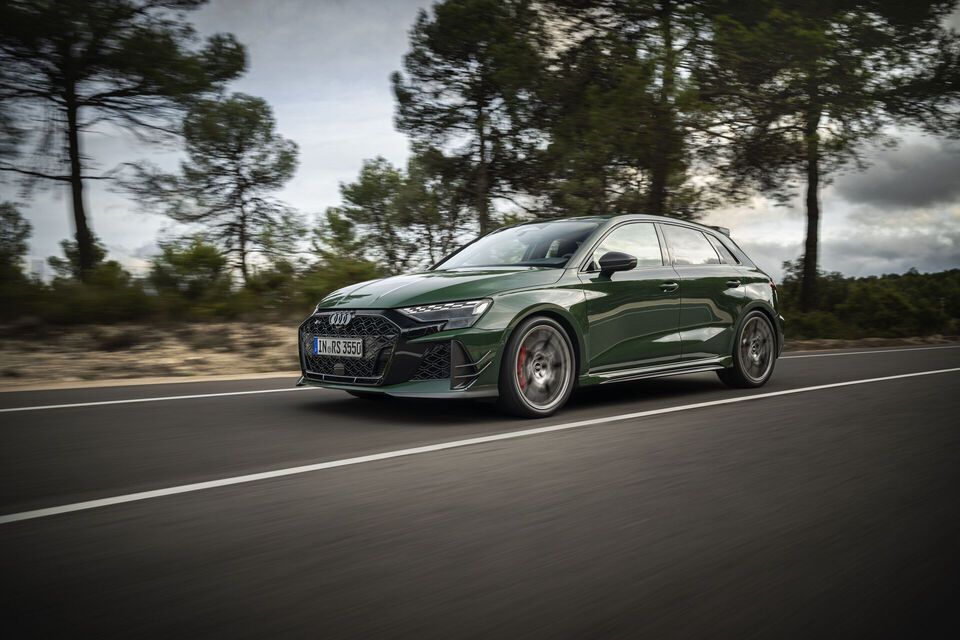
Audi has announced that production will be strictly limited, making it one of the most exclusive versions of the RS 3.
The model celebrates the five-cylinder engine at a particularly significant moment in Audi’s history.
Fifty years after the first Audi production five-cylinder appeared, the engine remains one of the defining characteristics of Audi Sport.
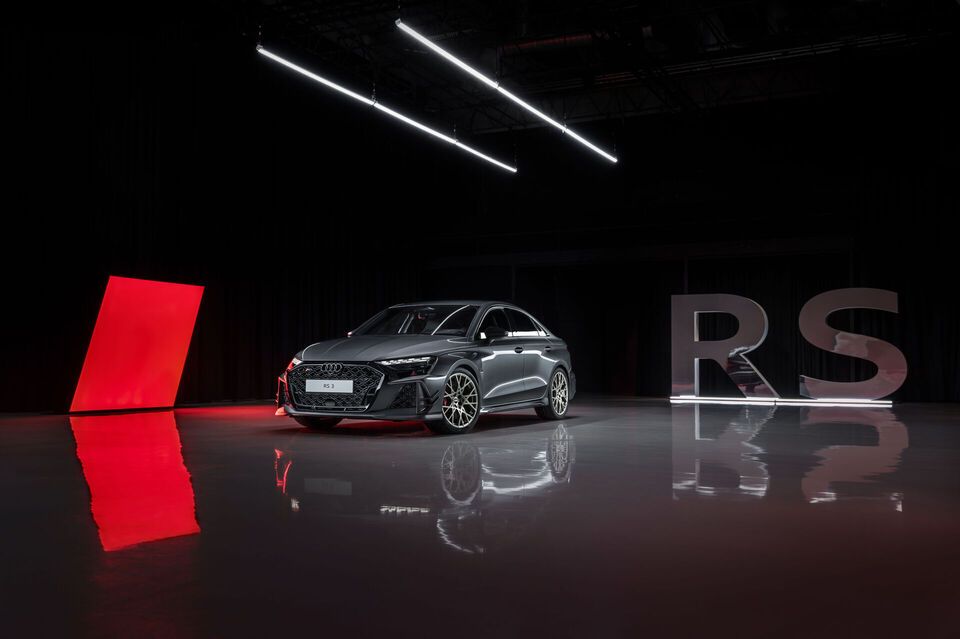
750 Examples of Five-Cylinder History
The RS 3 Competition Limited will be restricted to just 750 examples.
That makes it more than simply another specification level.
It represents a celebration of an engine that has survived for five decades while much of the automotive industry has moved towards smaller engines, hybridisation and electrification.
The limited edition is particularly significant because the five-cylinder remains one of the last truly distinctive combustion engines in modern performance motoring.
The Engine That Connects Generations
Perhaps the most remarkable thing about Audi’s five-cylinder is the connection between generations.
The modern RS 3 may use sophisticated electronics, advanced all-wheel-drive systems and a highly developed turbocharged engine.
But when you hear it accelerate, there is still something recognisable.
There is still a connection to:
- The original Audi quattro
- The Sport quattro
- The Group B rally cars
- The RS2
- The original TT RS
- And the first RS 3
Few modern engines can claim that kind of heritage.
50 Years of Five-Cylinder Progress
The numbers tell their own story.
| Era | Model | Power |
|---|---|---|
| 1976 | Audi 100 five-cylinder | 136PS |
| 1980 | Audi quattro | 200PS |
| 1980s | Sport quattro | 306PS |
| 1994 | Audi RS2 | 315PS |
| Modern era | TT RS / first modern 2.5 TFSI | 340PS |
| RS 3 8V | MQB RS 3 | 367PS |
| Modern RS 3 | Current 2.5 TFSI | 400PS |
DTUK and the Modern Audi Five-Cylinder
For DTUK, the evolution of the Audi five-cylinder has also been an important part of our own tuning history.
Over multiple generations, we have worked with the modern 2.5 TFSI as it evolved from 340PS to today’s 400PS applications.
The progression of published results tells its own story:
| Generation | Standard | DTUK Result |
|---|---|---|
| Original 2.5 TFSI* | 340PS / 450Nm | 390PS / 500Nm |
| Early 2.5 TFSI* | 360PS / 465Nm | 400PS / 515Nm |
| RS 3 8V | 367PS / 465Nm | 410PS / 527Nm |
| RS 3 8V | 400PS / 465Nm | 443PS / 527Nm |
| Later applications | 400PS / 480Nm | 443PS / 540Nm |
| Current RS 3 | 400PS / 500Nm | 460PS / 566Nm |
*Historical published DTUK/DTE application figures. Product availability changes over time. Always check the DTUK website for current vehicle and engine applications.
Why the Five-Cylinder Still Matters
The automotive world is changing rapidly.
Performance cars are becoming hybridised and electrified. Manufacturers are increasingly focusing on efficiency, emissions and battery technology.
That makes the Audi five-cylinder increasingly special.
It represents something increasingly rare in the modern automotive industry:
An engine with genuine identity.
Its sound cannot be confused with anything else.
Its history connects modern Audi Sport cars to some of the greatest rally cars ever created.
And after 50 years, the five-cylinder remains capable of producing genuinely extraordinary performance.
Conclusion: A Proper Celebration of an Automotive Icon
The Audi RS 3 Competition Limited is more than another limited-edition performance car.
It is a celebration of one of the most distinctive engines in automotive history.
From the Audi 100 in 1976 to the original quattro.
From the madness of Group B to the RS2.
From the 340PS TT RS to today’s 400PS RS 3.
The Audi five-cylinder has survived, evolved and remained relevant for half a century.
And perhaps that is the greatest achievement of all.
Fifty years on, there is still nothing else quite like it.
Find Your Audi Performance Upgrade
DTUK has been involved with modern Audi performance tuning across multiple generations of the 2.5 TFSI five-cylinder engine.
To check current products available for your exact Audi model and engine, use the DTUK vehicle finder.
Explore Audi performance products at DTUK Performance
Performance figures quoted in this article are vehicle and engine specific. Actual results can vary depending on the exact vehicle specification and product application. Always check the current DTUK vehicle finder for the latest compatible products and published figures.