


Mercedes-AMG CLA 45 Goes Electric: The End of an Iconic 2.0-Litre Era
For more than a decade, the Mercedes-AMG 45 has represented one of the most extraordinary engineering stories in modern performance motoring. It began in 2013 with a 2.0-litre four-cylinder engine producing an almost unbelievable 360PS. It ended with 421PS. Now, the successor has abandoned internal combustion altogether.
The all-new Mercedes-AMG CLA 45 4MATIC+ is electric. It has three motors, up to 500kW of power and a claimed 0-100km/h time of just 2.7 seconds.
In other words, this is not simply the next chapter in the evolution of the AMG 45.
It is a complete reinvention.
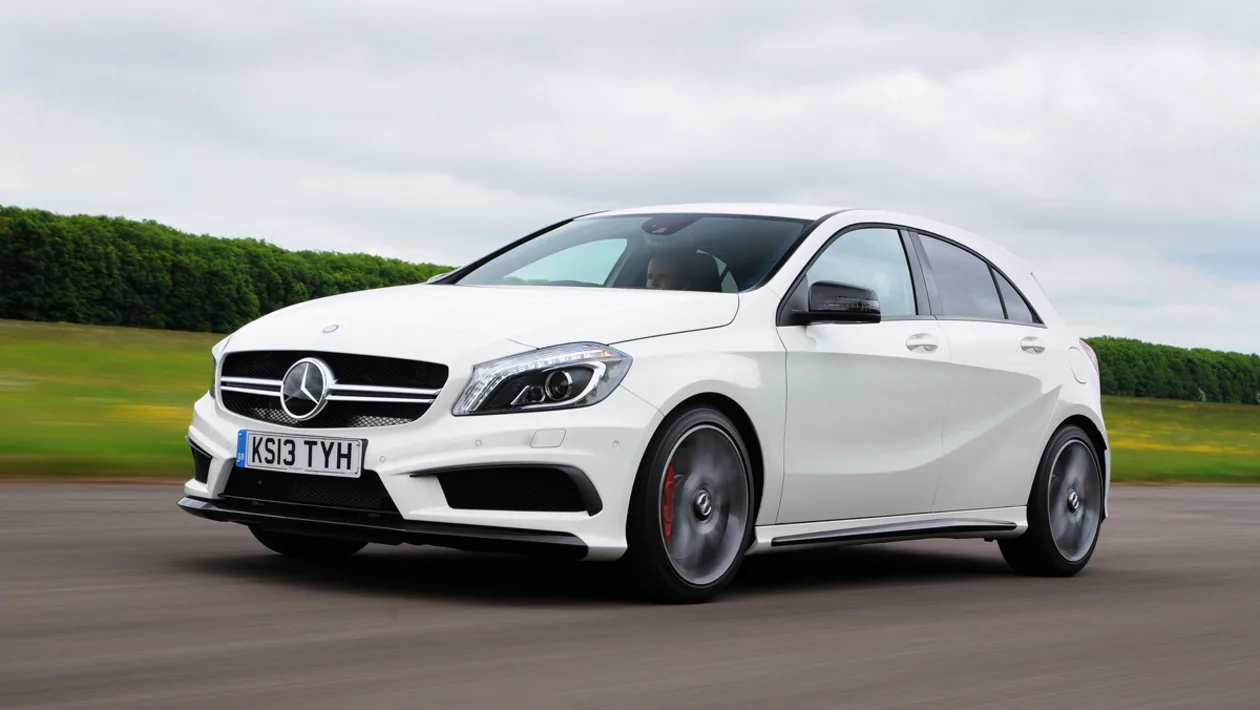
2013: The Car That Changed Expectations
When Mercedes-Benz unveiled the A 45 AMG in 2013, the figures alone were enough to attract attention.
Under the bonnet sat a 1991cc turbocharged four-cylinder petrol engine producing 360PS and 450Nm.
Those numbers were remarkable. The hot hatch market had plenty of fast cars, but the A 45 arrived with an engine output that pushed the boundaries of what buyers expected from a production four-cylinder.
It also represented a significant departure from the traditional AMG formula.
For decades, AMG had built its reputation around large-capacity engines. Six-cylinder, V8 and V12 models had defined the brand’s most famous cars. The A 45 took a different approach entirely: a compact Mercedes powered by an exceptionally highly developed four-cylinder engine.
The result was a new kind of halo car.
The A 45 was smaller than the traditional AMG models, but there was nothing small about its ambition.
And that ambition would define the next decade.
From 360PS to 421PS
Mercedes-AMG did not leave the formula alone.
Over the following years, the company continued to develop the compact performance powertrain, extracting more power and torque from its 1991cc four-cylinder engine.
The progression is striking:
- 2013 AMG 45: 360PS / 450Nm
- Updated AMG 45: 381PS / 475Nm
- New-generation AMG 45: 387PS / 480Nm
- AMG 45 S: 421PS / 500Nm
Over a little more than a decade, the factory output increased by 61PS.
More significantly, the engine evolved from a remarkable technical achievement into one of the defining powerplants of the modern compact performance era.
The later M139 engine, fitted to the second-generation A 45 and its related models, became particularly significant. In A 45 S form, it produced 421PS from 2.0 litres.
That was an extraordinary figure for a production four-cylinder engine and helped cement the AMG 45’s reputation as one of the most extreme compact performance cars on sale.
The AMG 45 Was Never Just One Car
Although the A 45 was the starting point, the engine quickly became the centre of a wider Mercedes-AMG performance family.
The same philosophy appeared in the CLA 45 and GLA 45, allowing Mercedes-AMG to bring its extraordinary four-cylinder performance to a range of different body styles.
But whichever version buyers chose, the appeal remained broadly the same.
Here was a compact Mercedes-AMG capable of delivering performance once associated with cars using engines twice the size.
That combination of compact dimensions, four-wheel drive and enormous specific output made the AMG 45 something genuinely distinctive.
It was an engine that enthusiasts talked about.
And increasingly, it became an engine against which other high-performance four-cylinders were measured.
The DTUK Performance Story
The AMG 45 engine family has also been an important part of DTUK’s history.
Across the different generations, compatible DTUK tuning applications demonstrated how much additional potential remained within Mercedes-AMG’s already highly developed four-cylinder engines.
The figures from the current DTUK application database provide an interesting snapshot of that development.
| AMG 45 generation | Standard power | Standard torque | DTUK result | DTUK torque |
|---|---|---|---|---|
| Original AMG 45 | 360PS | 450Nm | 405PS | 518Nm |
| Updated AMG 45 | 381PS | 475Nm | 434PS | 564Nm |
| New-generation AMG 45 | 387PS | 480Nm | 470PS | 594Nm |
| AMG 45 S | 421PS | 500Nm | 470PS | 594Nm |
The figures underline something important about the AMG 45 story.
Mercedes-AMG was not working with an ordinary engine in the first place. These were already highly developed performance powerplants producing exceptional outputs for their capacity.
Yet compatible DTUK applications demonstrated substantial additional power and torque potential across the different generations.
The 387PS generation is particularly striking, with the current DTUK data showing an increase to 470PS and 594Nm.
That is an additional 83PS and 114Nm.
The numbers provide a useful reminder of just how far the AMG 45 concept evolved during its combustion-engine lifetime.
The Final Edition: The End of the Road for the Petrol A 45
Every great engine story eventually reaches its final chapter.
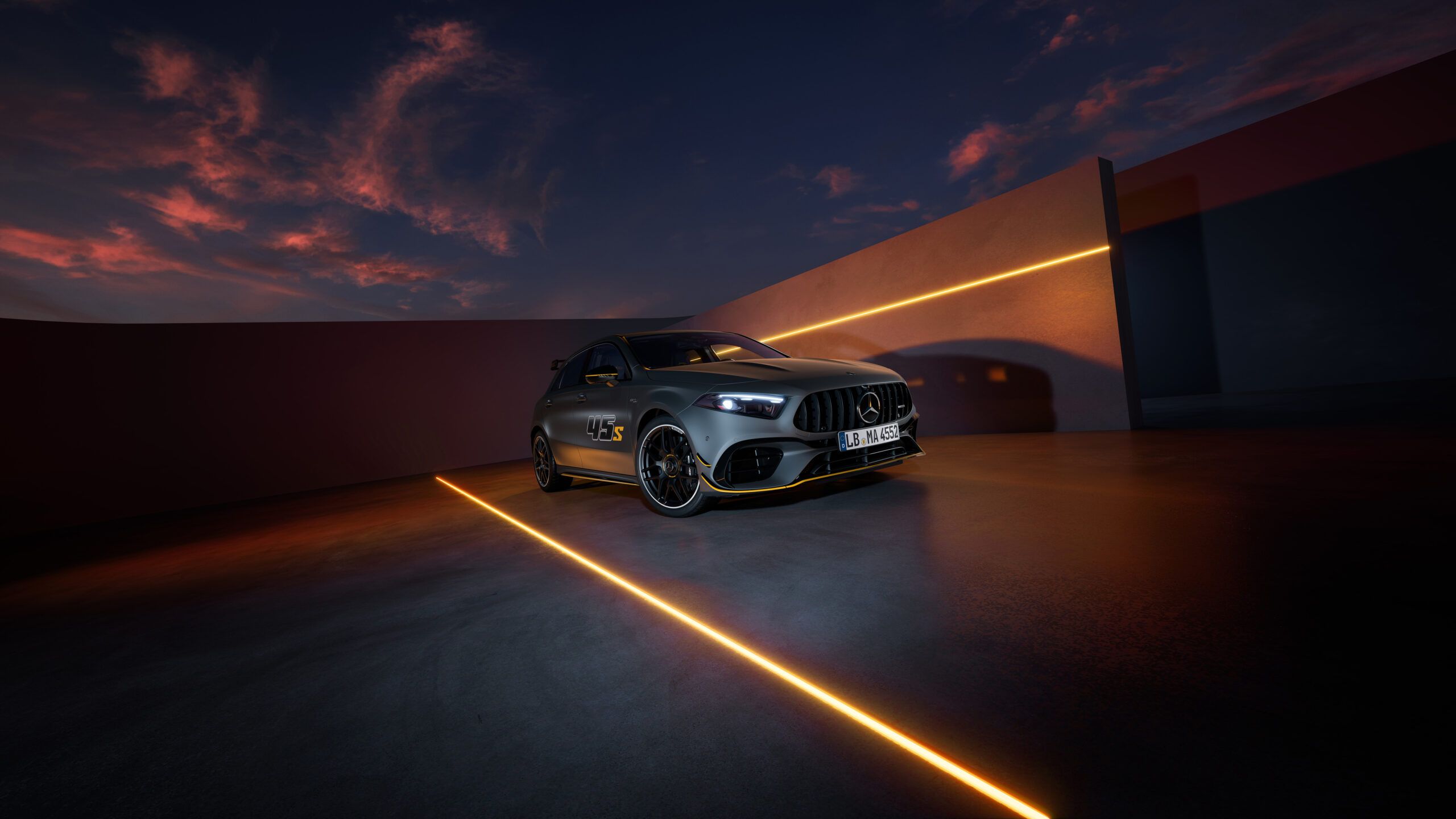
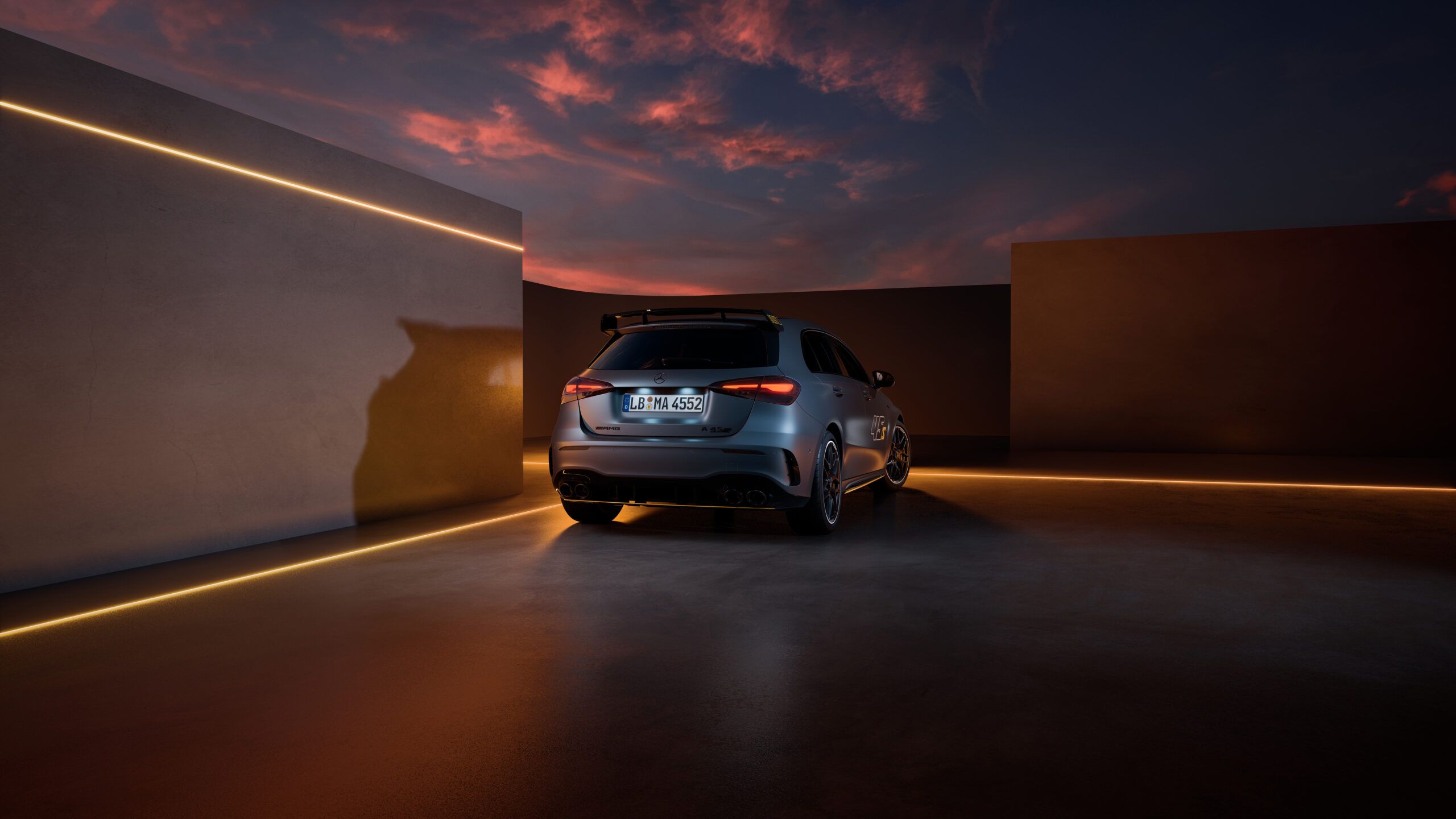
The Mercedes-AMG A 45 S Final Edition represents the culmination of the original concept that began back in 2013.
By this point, the formula had reached extraordinary levels.
421PS.
500Nm.
All from a 1991cc four-cylinder engine.
There is something particularly significant about that.
Mercedes-AMG spent more than a decade refining the compact performance formula, steadily increasing output while improving the technology surrounding the engine, drivetrain and chassis.
The Final Edition therefore represents more than simply another limited-run AMG.
It marks the closing chapter of one of the most remarkable four-cylinder engine programmes of the modern era.
Then Everything Changed
For years, the question surrounding the AMG 45 was simple.
How much more performance could Mercedes-AMG extract from a 2.0-litre four-cylinder engine?
The new CLA 45 asks a completely different question.
What happens when the engine disappears altogether?
The answer is dramatic.
Three Motors. 680hp. 2.7 Seconds.
The all-new Mercedes-AMG CLA 45 4MATIC+ is fully electric.
Its powertrain uses three axial-flux electric motors: two mounted on the rear axle and one on the front.
Combined output is rated at up to 500kW, equivalent to 680hp.
Mercedes-AMG claims the CLA 45 can accelerate from 0-100km/h in just 2.7 seconds.
With the optional AMG DYNAMIC PLUS Package, top speed rises to 270km/h.
The contrast with the original A 45 AMG could hardly be greater.
2013 Mercedes-Benz A 45 AMG
- 1991cc turbocharged four-cylinder petrol engine
- 360PS
- 450Nm
2026 Mercedes-AMG CLA 45 4MATIC+
- Three axial-flux electric motors
- Up to 500kW / 680hp
- Fully variable AMG Performance 4MATIC+ all-wheel drive
- 0-100km/h in 2.7 seconds
That is not conventional automotive evolution.
It is a complete change in philosophy.
Why the Nürburgring Matters
The Nürburgring-Nordschleife has long been one of the ultimate proving grounds for performance cars.
Straight-line acceleration is only one part of the story there.
A fast lap demands braking performance, chassis balance, thermal management, power delivery and the ability to perform consistently under extreme conditions.
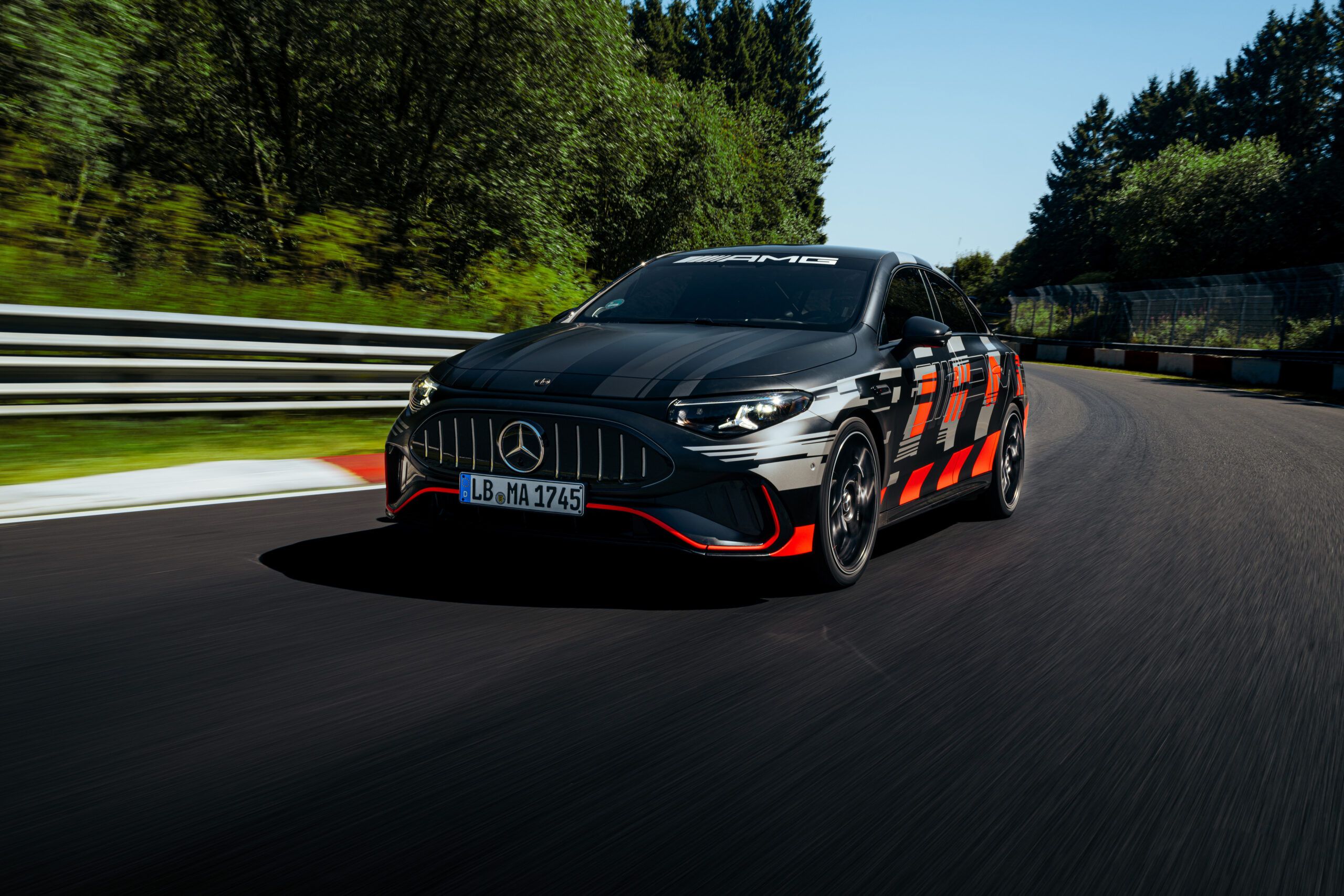
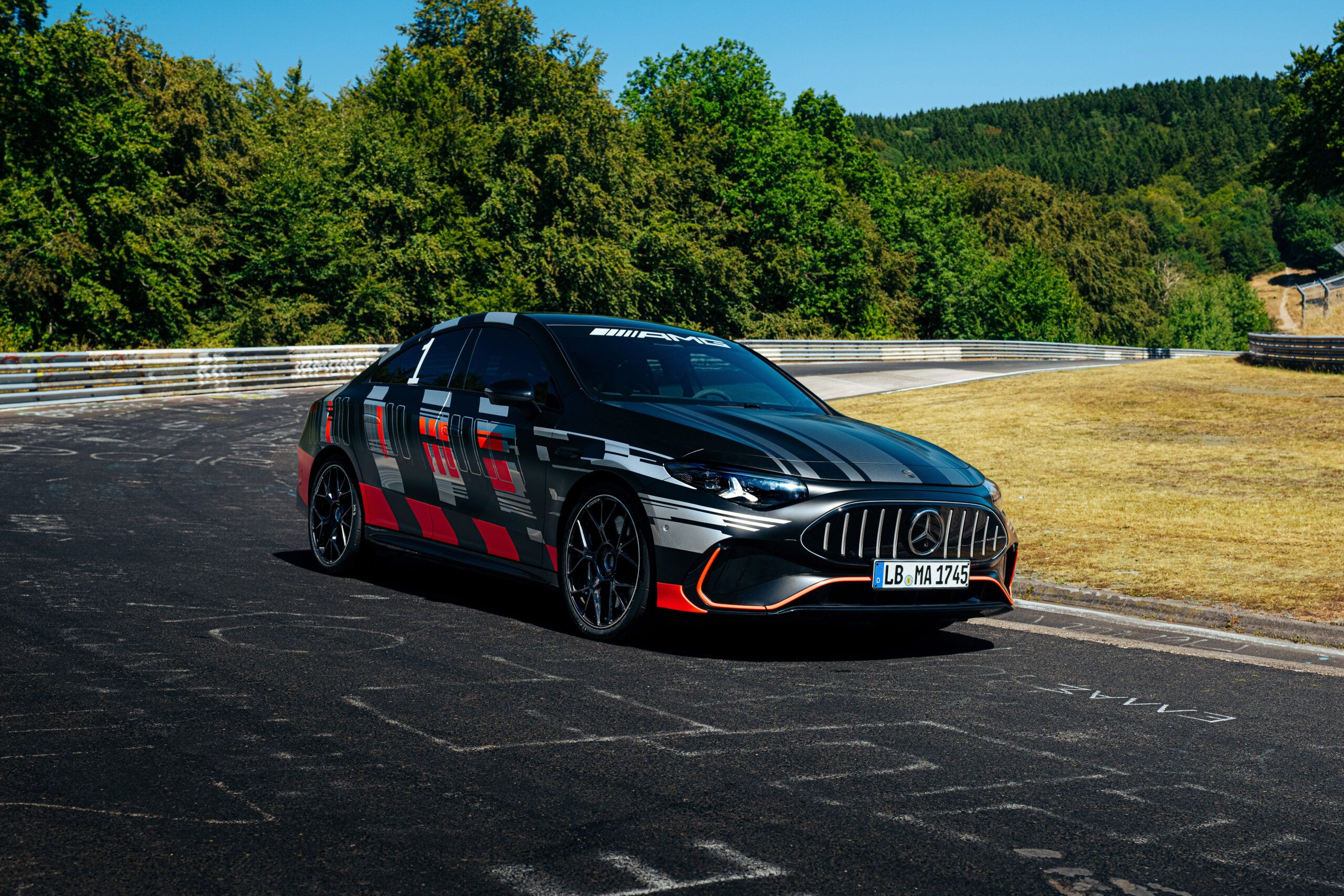
On 28 July 2026, the new Mercedes-AMG CLA 45 4MATIC+ recorded an officially measured and notarised lap of the Nürburgring-Nordschleife in 7 minutes 32.070 seconds.
Mercedes-AMG says the result made it the fastest vehicle in its segment around the circuit.
That is particularly significant because the CLA 45 represents an entirely new kind of AMG.
The original A 45’s engineering challenge centred around extracting extraordinary performance from a small turbocharged combustion engine.
The electric CLA 45 faces a different set of problems.
How do you manage the enormous demands placed on electric motors and battery systems during sustained high-performance driving?
How do you distribute torque effectively?
And how do you ensure that the car remains consistent when performance is repeatedly demanded?
The Nürburgring lap suggests Mercedes-AMG has taken those questions seriously.
A New Type of AMG Powertrain
The CLA 45 uses a fully variable AMG Performance 4MATIC+ system capable of distributing power between the front and rear axles and individually across the rear wheels.
This is one of the areas where electric performance changes the possibilities available to engineers.
Electric motors can respond extremely quickly, while sophisticated electronic systems can manage how torque is delivered to individual wheels.
In a modern high-performance electric car, the powertrain, chassis and software are increasingly inseparable.
The performance character of the car depends not only on how much power the motors produce, but how intelligently that power is controlled.
Mercedes-AMG has also equipped the CLA 45 with adaptive AMG Ride Control suspension and up to seven AMG DYNAMIC SELECT driving programmes.
The optional AMG DYNAMIC PLUS Package adds a dedicated RACE programme.
There is also active aerodynamic technology, including an active rear spoiler designed to balance stability and efficiency depending on driving conditions.
800 Volts and 330kW Charging
The electric revolution is not only about performance.
It also changes the practical engineering priorities surrounding a high-performance car.
The CLA 45 uses an 800-volt electrical architecture capable of supporting DC charging at up to 330kW.
Mercedes-AMG states that the battery can be charged from 10 to 80 per cent in approximately 22 minutes under suitable conditions.
The company also quotes more than 270 kilometres of additional range in ten minutes when charging at the maximum rate.
Official WLTP range is quoted at more than 670 kilometres for the saloon.
That combination is important.
The CLA 45 is designed to be an extremely fast electric performance car, but it is also intended to be capable of long-distance use.
That is a very different challenge from building a traditional petrol-powered hot hatch.
The Most Fascinating Question: Can an Electric AMG Still Feel Like an AMG?
Raw performance is unlikely to be the problem.
A car capable of reaching 100km/h in 2.7 seconds does not need convincing credentials.
The more difficult question is emotional.
AMG has always been about more than a number on a specification sheet.
There is the sound of the engine.
The sensation of the drivetrain.
The rhythm of acceleration and gear changes.
The sense that there is something mechanical happening beneath you.
An electric vehicle naturally changes all of that.
Mercedes-AMG’s response is one of the most interesting aspects of the new CLA 45.
Its AMGFORCE S+ driving programme has been developed to recreate aspects of the experience of a high-performance AMG four-cylinder engine.
Mercedes-AMG says the sound experience was developed using recordings captured by 13 microphones across more than 1,600 individual measurements.
The system includes simulated gearshifts, torque interruption during those shifts and manual gear changes controlled by steering-wheel paddles.
The car also features a rev counter, gear indicator and seat shakers designed to make the experience physically tangible.
It is a fascinating idea.
The successor to one of AMG’s most celebrated four-cylinder engines is, in effect, using digital technology to preserve some of the sensations associated with an internal-combustion performance car.
Whether traditional AMG enthusiasts embrace that idea remains to be seen.
But Mercedes-AMG clearly understands the question.
Speed alone is not the same thing as character.
The End of One Performance Philosophy
The original A 45 AMG was built around an engineering challenge.
How much performance could be extracted from a 2.0-litre four-cylinder engine?
Over the next decade, Mercedes-AMG provided the answer.
360PS.
Then 381PS.
Then 387PS.
And finally 421PS.
It was an extraordinary journey.
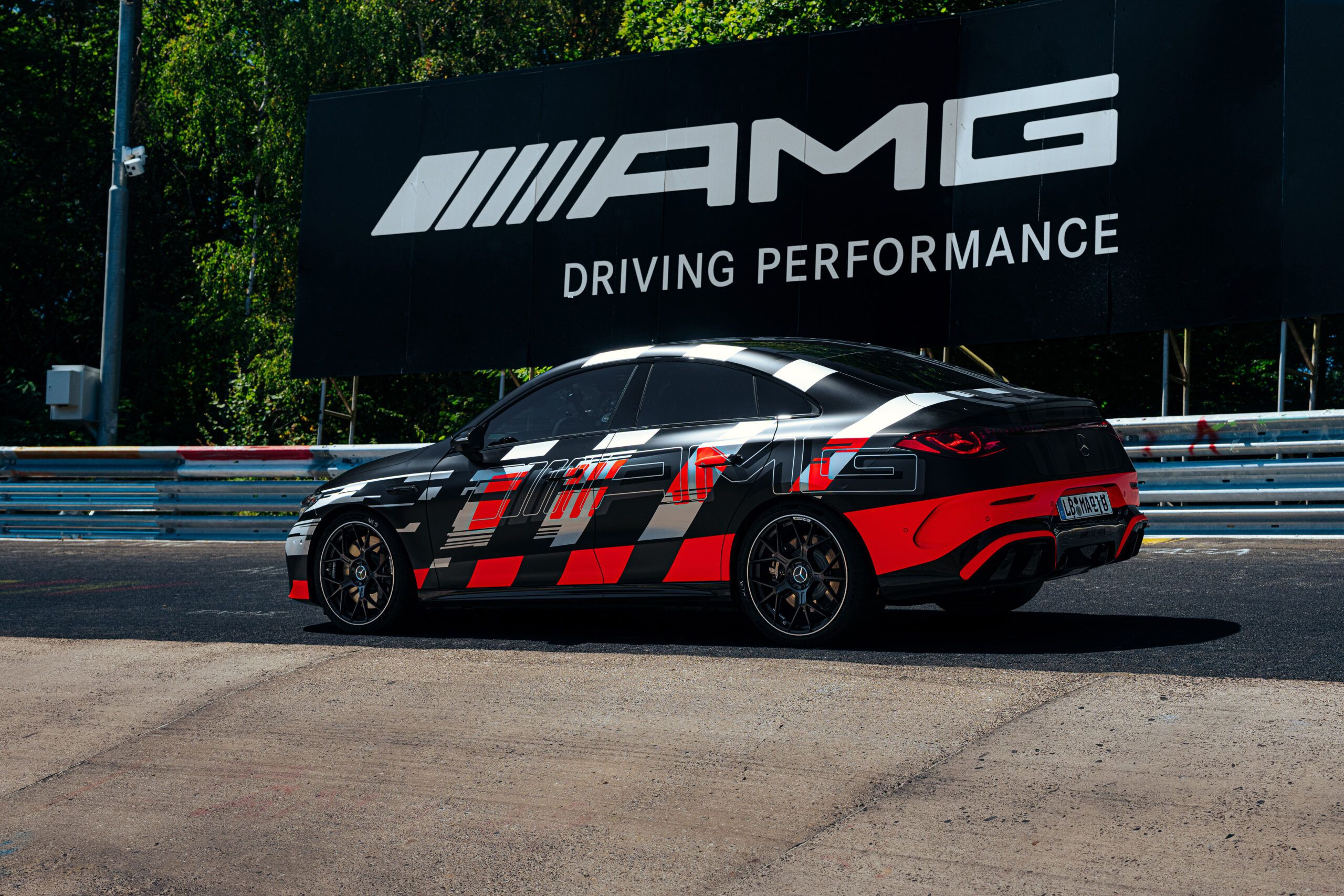
But the new CLA 45 demonstrates that the next chapter will not be about squeezing another 20PS from the same engine.
The engine programme itself has reached its conclusion.
The new performance challenge is electric.
What It Means for the Future of Performance Tuning
The transition represented by the new CLA 45 is also significant for the wider performance industry.
For decades, increasing performance has largely meant extracting additional potential from combustion engines.
Turbocharging, fuel systems, sensors and electronic engine management created opportunities for increasingly sophisticated tuning technology.
The AMG 45 is a perfect example of that era.
Even Mercedes-AMG’s own factory outputs increased dramatically during the life of the 2.0-litre engine, while compatible DTUK applications demonstrated substantial additional power and torque potential across several generations.
Electric performance vehicles present a different technical landscape.
Traditional engine tuning does not simply transfer from an internal-combustion vehicle to an electric car.
However, the performance experience itself remains important.
Throttle response.
Driving modes.
Torque delivery.
Electronic control.
The relationship between driver and vehicle.
These areas are likely to become increasingly significant as the automotive market continues to evolve.
The DTUK Perspective
The history of the AMG 45 is particularly interesting because it captures an important period of change in the automotive industry.
In 2013, Mercedes-AMG shocked the compact performance market with a 360PS 2.0-litre engine.
By the end of the combustion-engine story, the A 45 S had reached 421PS.
Now the new CLA 45 4MATIC+ enters the electric era with up to 500kW, or 680hp, from three electric motors.
The numbers have changed.
The technology has changed.
And the engineering philosophy has changed.
What remains unchanged is the pursuit of performance.
The historical DTUK figures discussed in this article relate to compatible combustion-engine Mercedes-AMG applications and should not be interpreted as indicating that a DTUK tuning product is currently available for the new electric CLA 45.
As new vehicles and technologies develop, DTUK Performance will continue to follow the market and assess future opportunities.
From 360PS to Electric
The story of the AMG 45 can be told in a remarkably simple sequence.
2013: 360PS.
The original compact AMG.
Then came 381PS.
Then 387PS.
Then 421PS.
Each generation pushed the limits of what could be achieved from a 2.0-litre four-cylinder production engine.
Now the successor has no engine at all.
Instead, it has three electric motors, sophisticated torque management, an 800-volt electrical architecture and up to 680hp.
The original A 45 AMG changed expectations of what a compact performance car could be.
The new electric CLA 45 may have to do the same thing again.
The technology is different.
The sound is different.
The driving experience may be different.
But the ambition remains unmistakably AMG.
The era of the extraordinary 2.0-litre AMG 45 is over.
The electric era has begun.
Looking for performance products for your current Mercedes-Benz or Mercedes-AMG? Explore the DTUK Mercedes-Benz tuning range to see compatible performance and throttle response products for your vehicle.