

PedalBox EV Explained – Can You Improve Throttle Response on Electric Cars?
Electric cars are well known for their instant torque, so we’re often asked a very reasonable question:
If an electric car already responds quickly, what is the point of fitting a PedalBox EV?
The answer lies in the difference between the electric motor itself and the way the accelerator pedal is programmed to control it.
An electric motor can produce torque extremely quickly, but that doesn’t necessarily mean the accelerator pedal gives you immediate access to that response. Just like a modern petrol or diesel vehicle, an EV uses an electronic accelerator pedal, and the vehicle manufacturer decides how pedal movement is translated into a request for power.
PedalBox EV allows the driver to change that accelerator response.
But there’s more to PedalBox EV than simply making an electric car feel sharper. Developed specifically for electric vehicles by DTE Systems in Germany, it offers different accelerator characteristics ranging from its efficiency-focused Long Range programme through to Performance mode.
What is PedalBox EV?
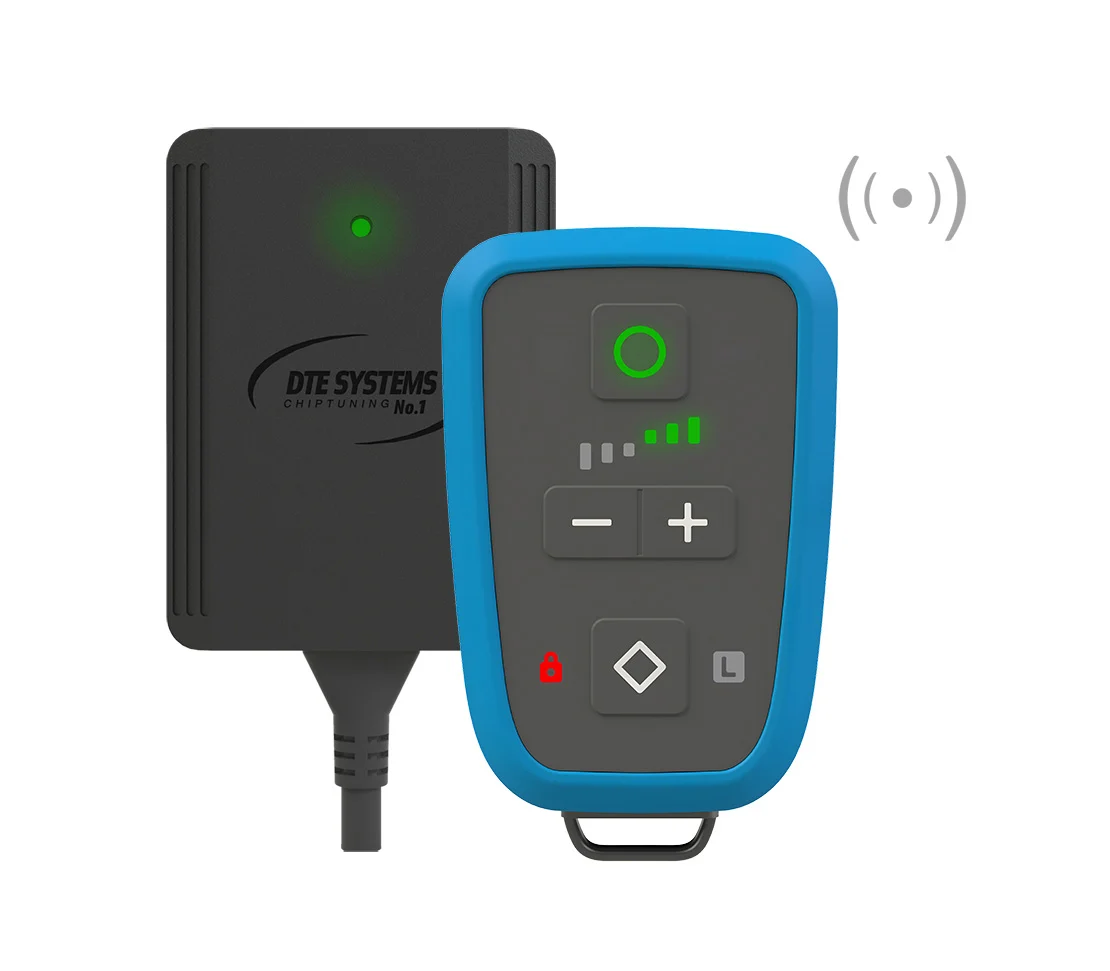
PedalBox EV is an accelerator response system developed specifically for battery-electric vehicles.
It connects to the vehicle’s electronic accelerator pedal using a vehicle-specific plug-and-play wiring loom and modifies the accelerator signal characteristic.
Put simply, it changes the relationship between what you do with the accelerator pedal and how the vehicle responds to that input.
This means the response can be made smoother and more progressive when efficiency is the priority, or sharper and more immediate when you want a sportier driving experience.
Importantly, PedalBox EV does not increase the maximum power or torque produced by the electric motor.
It isn’t an EV power upgrade or an ECU remap. It changes accelerator response rather than increasing the vehicle’s factory maximum output.
But Don’t Electric Cars Already Have Instant Throttle Response?
This is where there is often some confusion.
An electric motor can deliver torque extremely quickly, but the accelerator pedal doesn’t directly connect your right foot to the motor.
Modern EVs use a drive-by-wire accelerator. Pressing the pedal generates an electronic signal which is interpreted by the vehicle’s control systems.
The manufacturer determines how that pedal position translates into the vehicle’s response. The standard accelerator characteristic may deliberately be progressive to provide smoothness, comfort and easy low-speed control.
That’s one reason two electric cars with similar power outputs can feel very different when you press the accelerator.
PedalBox EV works with this electronic accelerator signal, allowing the driver to alter the response characteristic without changing the electric motor, battery or factory maximum power output.
Five PedalBox EV Driving Modes
One of the biggest advantages of PedalBox EV is that you’re not limited to one more aggressive accelerator setting.
There are five driving modes:
- Long Range
- Comfort
- Dynamic
- Performance
- Series – the vehicle’s standard accelerator characteristic
The response can also be fine-tuned using the plus and minus controls, giving the driver considerably more control over how the accelerator behaves.
Long Range Mode – The Clever Part of PedalBox EV
Long Range is perhaps the most interesting PedalBox EV programme because it does almost the opposite of what many people expect from an accelerator response controller.
Instead of simply making the accelerator more aggressive, Long Range uses an algorithm designed to optimise the accelerator signal during acceleration and changing-load conditions.
According to DTE Systems, Long Range mode helps prevent the normal energy peaks associated with acceleration by converting the pedal signal more progressively.
DTE reports up to 20% lower energy consumption during acceleration phases.
That figure needs to be understood correctly.
It does not mean that fitting a PedalBox EV automatically gives your electric car 20% more driving range.
The figure specifically relates to energy consumption during acceleration phases. DTE states that the benefit is particularly relevant during changing-load situations such as stop-start urban driving and journeys where speed is regularly changing.
DTE also states that when the vehicle is travelling at a constant speed, Long Range mode does not intervene in the signal management and therefore has no influence on the amount of energy being used at that point.
In simple terms, the greater the proportion of your journey spent accelerating and changing speed, the greater the potential opportunity for Long Range mode to influence energy consumption.
Actual EV range will, of course, still depend on many other factors including driving style, speed, journey type, traffic, outside temperature, heating and air-conditioning use and the individual vehicle.
For that reason, at DTUK we think it’s more accurate to describe Long Range as an efficiency-focused accelerator programme with the potential to improve real-world energy consumption, rather than promise customers a fixed percentage increase in overall range.
Long Range also retains a kick-down function, allowing the driver to demand stronger acceleration when required.
Comfort Mode
Comfort is designed to provide a smoother and more relaxed accelerator response.
The accelerator characteristic is deliberately progressive, particularly through the lower and middle part of the pedal range. This can make powerful electric vehicles easier to control smoothly during everyday driving.
For town driving, traffic and situations where you don’t want an aggressive response every time you move your right foot, Comfort can make an EV feel much more progressive.
Dynamic Mode
Dynamic moves things in the other direction.
Accelerator inputs are translated into a more immediate response, making the vehicle feel more alert when you press the pedal.
The electric motor hasn’t suddenly gained additional horsepower or torque – you’re changing how the available performance responds to accelerator input.
For many drivers, Dynamic is likely to provide a useful balance between everyday driveability and a noticeably more responsive feel.
Performance Mode
Performance provides the sportiest accelerator characteristic.
DTE describes it as optimising response across the entire accelerator signal range, producing a more immediate and aggressive reaction to pedal input.
Again, maximum motor power remains unchanged. What changes is how quickly and strongly the vehicle responds to your right foot.
Series Mode – Back to the Factory Setting
Don’t want any alteration at all?
Select Series and the vehicle returns to its standard accelerator characteristic.
This means the driver can move between the original factory response, smoother efficiency-focused settings and progressively sportier responses whenever required.
Fine-Tune the Accelerator Response
Choosing the driving mode is only part of the adjustment available.
DTE specifies seven individual settings within the adjustable driving programmes. Using the plus and minus controls, the selected characteristic can be increased or reduced through three additional stages.
That allows you to tailor PedalBox EV rather than simply choosing between an ‘on’ and ‘off’ setting.
Some drivers may only want a subtle change from standard. Others may prefer a considerably sharper response.
PerfecTune – Calibrated to Your EV
PedalBox EV also incorporates DTE’s PerfecTune auto-calibration system.
PerfecTune allows the PedalBox EV to adapt itself to the accelerator signal of the individual vehicle.
With Comfort, Dynamic or Performance selected, the calibration process uses accelerator movement from 0 to 100% to learn the vehicle’s pedal range automatically.
This allows the response characteristics to be matched to the particular accelerator system fitted to the vehicle.
Wireless Remote Control and Smartphone App
PedalBox EV can be controlled using its wireless remote control or the PedalBox smartphone app.
The main control unit can therefore be installed discreetly while the driver changes modes and settings wirelessly.
You might, for example, choose Long Range for an urban commute, Comfort for relaxed everyday driving and Dynamic or Performance when you want a more immediate response.
PedalBox EV Limit Mode
PedalBox EV also includes a dedicated Limit Mode.
Rather than increasing accelerator response, Limit Mode restricts the maximum accelerator-pedal request available through the PedalBox EV system.
DTE provides seven selectable levels, ranging from approximately 20% through to 80% of the maximum pedal position.
This can be useful when a powerful electric vehicle is being driven by a less experienced driver, used for valet parking or temporarily handed to somebody else.
With the enormous performance now available from some modern EVs, being able to deliberately restrict accelerator response can be a genuinely useful additional feature.
Built-In Immobiliser
PedalBox EV also incorporates an immobiliser function as an additional layer of vehicle security.
When the immobiliser is active, PedalBox EV prevents the vehicle’s power from being released through its accelerator-control system.
At each start, the system is released when the associated PedalBox EV remote control or paired smartphone is recognised within range.
This operates independently of the vehicle’s original key and factory security systems.
Does PedalBox EV Increase Power or Torque?
No.
This is an important distinction.
PedalBox EV does not increase the electric motor’s maximum horsepower, PS, kW or torque.
If your EV produces 300PS before fitting PedalBox EV, its maximum output remains 300PS afterwards.
What changes is the accelerator characteristic and therefore how the available performance responds to pedal input.
This is fundamentally different from a DTUK tuning box fitted to a compatible petrol or diesel vehicle, where the objective is to increase engine power and torque.
With PedalBox EV, the objective is to give the driver greater control over response and driving characteristics.
Can PedalBox EV Increase Electric-Car Range?
It potentially can contribute to improved efficiency, depending on how and where the vehicle is driven – but it’s important not to turn DTE’s test figure into a promise it doesn’t make.
DTE reports that its Long Range algorithm can achieve up to 20% lower energy consumption during acceleration phases.
That is not the same as claiming a 20% increase in the vehicle’s total driving range.
At a steady speed, PedalBox EV isn’t reducing the energy required to overcome aerodynamic drag, rolling resistance and the other forces acting on the vehicle. DTE specifically states that Long Range mode does not influence energy consumption while travelling at a constant speed.
Where Long Range can potentially make a difference is during acceleration and changing-load situations by smoothing the accelerator signal and reducing peaks in energy demand.
Consequently, the potential benefit will vary considerably according to the journey and the driver.
An EV repeatedly accelerating and slowing through urban traffic presents a very different situation from the same vehicle travelling for an hour at a steady motorway speed.
How is PedalBox EV Installed?
PedalBox EV is designed as a plug-and-play system.
The vehicle-specific wiring loom connects at the electronic accelerator pedal using the appropriate original-style connectors.
There is no ECU remap and no software flashing of the vehicle’s electric drivetrain.
After installation, PerfecTune allows the system to be calibrated to the vehicle’s accelerator pedal.
The installation is also reversible, allowing the PedalBox EV hardware to be removed if required.
Exact access to the accelerator connector varies between vehicles, so installation time and procedure can differ slightly from one model to another.
Does PedalBox EV Modify the Battery or Electric Motor?
No. PedalBox EV isn’t modifying the battery management software or programming the electric motor to produce additional maximum output.
Its purpose is much more specific: altering the accelerator-pedal signal characteristic.
The vehicle’s own systems remain responsible for controlling the electric drivetrain and determining the power that can be delivered.
That’s why we describe PedalBox EV as an accelerator-response upgrade rather than an EV power upgrade.
PedalBox EV vs EV Remapping
They’re fundamentally different concepts.
An EV power tune or software modification would involve changes within the vehicle’s drivetrain control software in an attempt to alter maximum performance.
PedalBox EV doesn’t do that.
Instead, it works with the electronic accelerator input and changes its response characteristic.
For drivers who don’t necessarily want more maximum power but would like their EV to feel sharper, smoother or simply better matched to the way they drive, PedalBox EV offers a completely different approach.
Which Electric Cars Can Use PedalBox EV?
PedalBox EV is available for a growing range of electric vehicles.
Compatibility depends on the particular electronic accelerator system fitted to the vehicle, so it’s important to check the exact make, model and power output rather than assuming that every version of a particular EV uses the same system.
Use the DTUK vehicle finder to select your exact electric vehicle and check whether PedalBox EV is currently available.
Is PedalBox EV Worth Fitting?
That depends on what you want to change about your electric car.
If you’re looking for additional maximum motor power, PedalBox EV isn’t designed to provide it.
If, however, you like your EV but would prefer greater control over the way it responds to the accelerator, PedalBox EV provides something rather different: the ability to personalise the accelerator characteristic to suit the way you want to drive.
You can make the response smoother and more efficiency-focused for everyday driving, sharper and more immediate when you want a sportier feel, restrict accelerator response when somebody else is driving, or return the vehicle to its original factory characteristic.
PedalBox EV doesn’t give your electric car more maximum power. It gives you more control over how the power that’s already there responds to your right foot.
Find PedalBox EV for Your Electric Car
Use the DTUK vehicle search to select your manufacturer, model and exact electric powertrain.
Where PedalBox EV is available, you’ll find the correct vehicle-specific system for your car.
DTUK Performance has specialised in plug-and-play vehicle tuning and accelerator response systems since 2005. If you’re unsure whether PedalBox EV is compatible with your vehicle, contact our UK technical team and we’ll be happy to help.