

Tuning Box vs ECU Remap – Which Should You Choose in 2026?
If you want more power and torque from your car, two options dominate the conversation: a tuning box (also called a performance module or chip tuning box) and an ECU remap.
Both can deliver noticeable gains, but they work in fundamentally different ways. Choosing the wrong one for your situation can affect warranty, resale value, insurance and how easy it is to return the car to standard.
In this guide we give a clear, up-to-date comparison for 2026 — including an honest look at some of the criticism directed at tuning boxes over the years, and the growing limitations of remapping on modern vehicles.
What is an ECU Remap?
An ECU remap involves rewriting the software inside the car’s Engine Control Unit. A specialist reads the original file, modifies various maps (fuel quantity, boost pressure, injection timing, torque limits, etc.), and writes the new software back to the ECU.
Characteristics of a remap:
- Permanent change to the ECU software (unless the original file is restored)
- Can adjust a wide range of parameters
- Usually performed by a specialist with diagnostic tools
- Original software is normally stored as a backup
What is a Tuning Box?
A tuning box is a plug-and-play module that sits between the engine sensors and the ECU. It intercepts and modifies sensor signals (commonly fuel rail pressure, boost pressure and, on more advanced units, additional channels) in real time. The ECU itself is never rewritten — it simply reacts to the altered signals.
Characteristics of a modern tuning box:
- Fully reversible — remove it and the car returns to standard
- No software is written to the ECU
- DIY installation in most cases (15–20 minutes)
- Multi-map systems with adjustable power levels
- Optional Bluetooth app control on higher-end units
- Can often be transferred to another compatible vehicle
Head-to-Head Comparison
| Feature | Tuning Box | ECU Remap |
|---|---|---|
| Installation | DIY, usually 15–20 minutes | Requires specialist tools & knowledge |
| Reversible | Completely removable with no trace | Possible, but needs original file restored |
| Warranty Risk | Very low (no ECU rewrite) | Higher – software changes can be detected |
| Power & Torque Gains | Up to 40% on many engines | Can produce strong gains (when possible) |
| Drivability | Smooth when well calibrated, multi-map adjustable | Depends heavily on the quality of the tune |
| Cost | Generally competitive | Similar or higher |
| Transferable | Often possible | Rarely |
| Dealer / MOT visits | Easy to remove beforehand | Harder to conceal |
| Compatibility with locked ECUs | Not affected – works via sensors | Often blocked or delayed for years |
Why Have Tuning Boxes Been Criticised?
Over the years, some companies that specialise in remapping have been highly critical of tuning boxes. In certain cases this criticism has been quite strong, with claims that boxes are ineffective, unsafe or poor value.
It is worth remembering that companies whose main business is selling remaps naturally have a commercial interest in promoting remapping as the superior solution. This can sometimes lead to an unbalanced view of what a good quality tuning box can actually achieve.
While it is true that basic or poorly designed boxes can under-deliver, modern multi-channel systems are far more sophisticated than the products often used in older comparison tests. A well-engineered tuning box can deliver strong, usable gains while offering clear practical advantages that a permanent software change cannot match.
The Growing Problem of Locked ECUs
One of the most significant developments in recent years is the increasing lockdown of ECUs by vehicle manufacturers. Many modern cars now feature heavily encrypted or protected ECUs that make traditional remapping extremely difficult or impossible.
It can take developers months or even years to find ways around these security measures. During that time, owners of newer vehicles are left with no remapping option at all.
A tuning box is not affected by these restrictions. Because it connects to the engine sensors and never communicates directly with, or attempts to rewrite, the ECU, it continues to work on the latest vehicles regardless of how tightly the manufacturer has locked the software.
This makes a quality tuning box one of the few reliable performance upgrades available for many of the newest petrol, diesel and hybrid models on the market.
Advantages of a Tuning Box
- Fully reversible with no permanent changes
- No risk of corrupting or “bricking” the ECU
- Easy to remove before dealer visits or when selling the car
- Multi-map adjustability (economy, standard, sport settings)
- Suitable for leased or company vehicles
- Often transferable to a future vehicle
- Works on vehicles with locked ECUs where remapping is not possible
- Works excellently alongside a PedalBox for sharper throttle response
Which Should You Choose in 2026?
A high-quality tuning box is the better choice for most drivers who want:
- Reversibility and peace of mind
- Easy DIY installation
- Lower risk to warranty
- The ability to remove the system at any time
- Strong, usable gains for daily driving or towing
- A solution that works even when the ECU is locked by the manufacturer
A remap may still appeal to those seeking the highest possible peak power on older or unlocked vehicles and who are comfortable with a permanent change to the ECU. However, for the majority of everyday drivers — especially those with newer cars — the flexibility, lower risk and wider compatibility of a modern tuning box make it the more practical solution.
Many owners find that combining a quality tuning box with a PedalBox delivers the most enjoyable result — more power and torque plus much sharper throttle response — while keeping the option to return everything to standard whenever required.
Why DTUK Tuning Boxes?
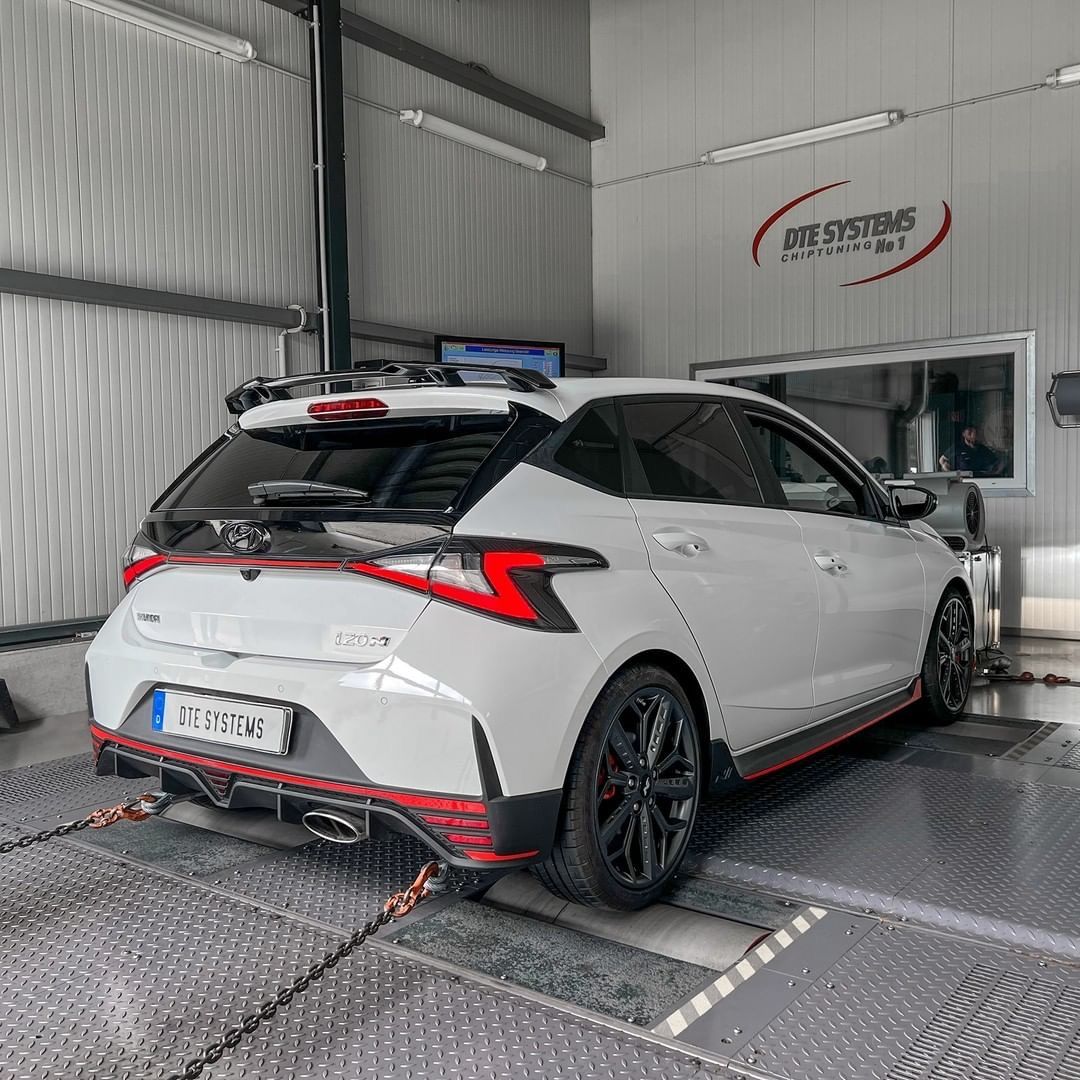
DTUK systems are manufactured in Germany by DTE Systems and use multi-channel technology with adaptive features and optional Bluetooth app control. They are designed to deliver strong, usable gains while remaining fully removable and leaving no trace on the ECU.
Because they work by connecting to the sensors rather than rewriting the ECU, they remain effective even on the latest vehicles with locked software.
We also supply the PedalBox and PedalBox EV range for drivers who want improved throttle response on petrol, diesel, hybrid or pure electric vehicles.
Conclusion
There is no single solution that suits every driver. However, for most people the practical benefits of a modern tuning box — full reversibility, lower warranty risk, easy installation, strong real-world gains, and compatibility with locked ECUs — make it a highly attractive option in 2026.
If you are unsure which route is right for your car, use the vehicle search on our website or contact us. We are happy to advise based on your specific model and requirements.
Ready to explore the options?
Browse our full range of tuning boxes and PedalBox systems or search for your vehicle to see the exact gains available.